|
|

Minnesota Seniors Antiques &
Collectibles Online Archive!
If you missed any of Ms. Chesley's very
informative past articles,
you can access them here:
|
BOOT
SCRAPERS AND
BOOTJACKS
 Do
you know what these two items are?? Boot scrapers are
rather self explanatory... but what about bootjacks? Do
you know what these two items are?? Boot scrapers are
rather self explanatory... but what about bootjacks?
Let's investigate.
Starting with the easy item, a boot scraper. This is a
device to scrape or rub the bottom surface of boots and
shoes for the purpose of cleaning.
Everyday living, working
and walking led to packed in dirt, mud, dung, and/or
caked-in straw onto shoe bottoms. Boot scrapers were
used before entering a cleaner area. Typically that was
the main house or homestead. It could also have been a
bunkhouse or eating area. Foot scrapers were used
abundantly. They
 were
small (maybe 12 inches in size), portable or affixed,
and very common in the 1800's and early 1900's. A few
date back to the 1700's. They were made of cast iron or
sturdy wood. Some were ornate and some were plain Jane. were
small (maybe 12 inches in size), portable or affixed,
and very common in the 1800's and early 1900's. A few
date back to the 1700's. They were made of cast iron or
sturdy wood. Some were ornate and some were plain Jane.
SOME PRICE EXAMPLES OF
BOOT SCRAPERS:
-
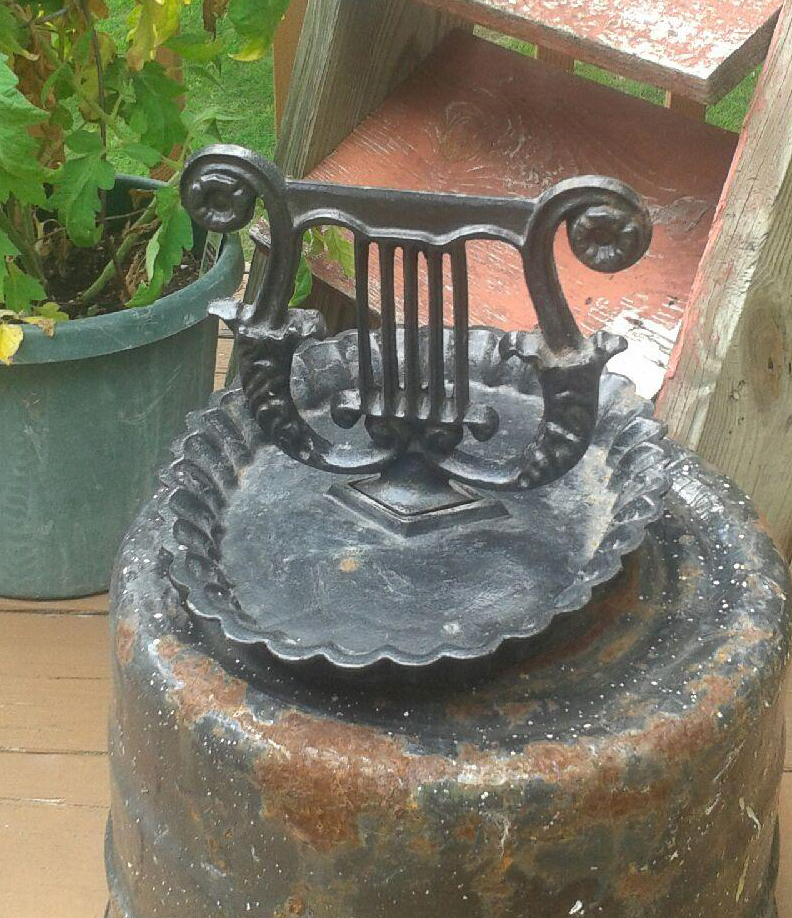
Cast iron, Lyre shape on oval base with scalloped
pattern, 9"x11' $85
-
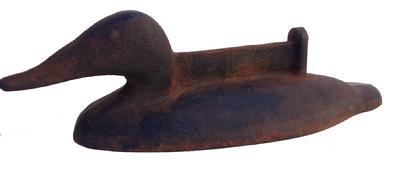
Cast iron, Duck, full body design,
15"
$200
-
Cast iron, Pig, side view with one cut-out eye,
12" $150
-
Cast iron, Cat design,
15"
$30
-
Cast iron, Black shoeshine boy design,
13" $100
-
Cast iron, Elephant design,
11"
$30
-
Cast iron, Dachshund design,
20"x7"x7"
$130
-
Wood, Dachshund, full body
design
$75
 Next,
let's investigate bootjacks. Next,
let's investigate bootjacks.
This is a device to aid
in the removal of boots and shoes. It is a yoke like
device or tool for catching the heal of a boot or shoe,
and then pulling it off. Most often made of metal, cast
iron or wood. Some had fancy designs or shapes, and
again, some were plain Jane.
SOME PRICE EXAMPLES OF
BOOTJACKS:
-
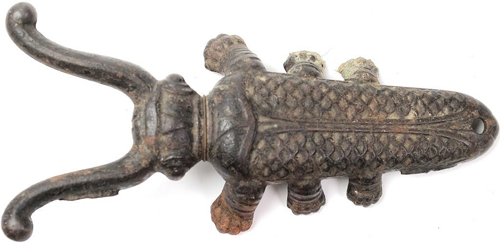
Cast iron, Beetle shape,
4"x11"x3"
$85
-
Cast iron, Dachshund design,
8"x24"x6"
$110
-
Hickory wood, basic v-shape, bent handle,
long $50
-
Cast iron, basic
v-shape
$40
-
Cast iron, Moose,
11"
$35
-
Wood, Fish design carved,
22"
$70
-
Cast iron, Pistol and boar design, ornate, folds,
9" $200
I wish you good luck
shopping for, using and decorating with antiques and old
stuff. All information in this column is my opinion
only. All price estimates are my opinion only.
Lastly, I own the lyre
shaped cast iron foot scraper described above. I got if
from my grandma when I was only a teenager. I had it
sandblasted and painted. Would I do that refinishing
today... I don’t know. |
|
BUTTONHOOKS

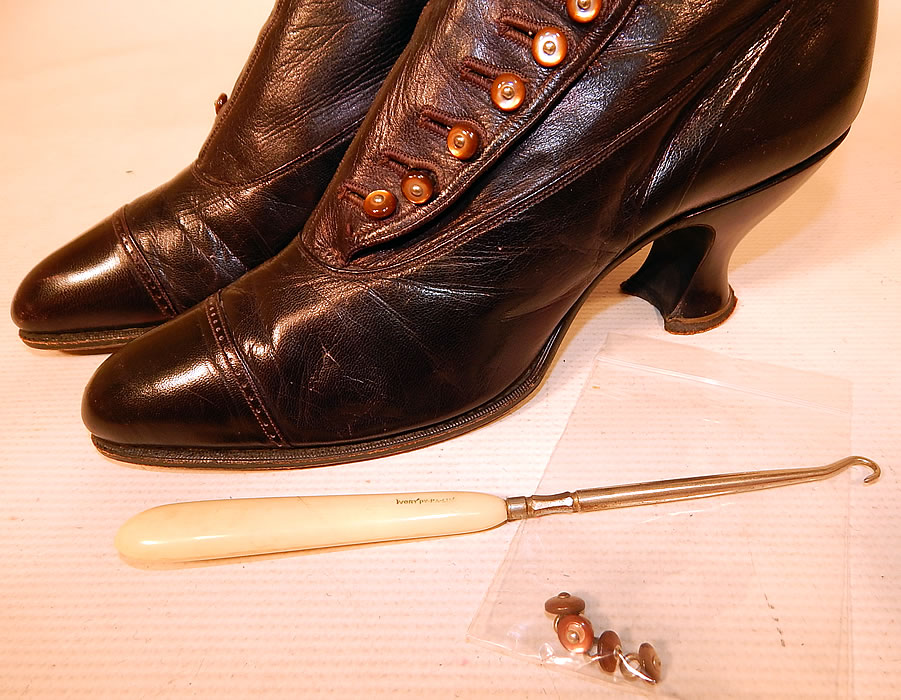
The buttonhook
tool became a needed item when clothing in fashion
included many, many tiny buttons for men, women and
children’s clothing and shoes. Tight fitting high
button shoes/boots were first followed by ladies’
gloves, dresses, men’s shirt collars and men’s wrist
cuffs.
Buttonhooks were used to
clasp or open tiny buttons on clothes. Ladies’ dresses,
gowns, work dresses and wedding gowns had maybe 20 to 40
buttons. The buttons were so tiny so a tool or device
was made to open and close the buttons.
 Buttonhooks
were made generic and also for a specific clothing item.
If one could afford, they would have 4 or 5 buttonhooks
for a specific type of button. Specific buttonhooks
included shoe hooks, glove hooks, dress hooks, and
several sizes of men’s clothing hooks including the
collar buttoner. Buttonhooks
were made generic and also for a specific clothing item.
If one could afford, they would have 4 or 5 buttonhooks
for a specific type of button. Specific buttonhooks
included shoe hooks, glove hooks, dress hooks, and
several sizes of men’s clothing hooks including the
collar buttoner.
There are two main types
of hooks. Most common is the “hook end”, less common is
the “closed wire loop”. Some buttonhooks folded or
retracted. Some merchants offered free steel
buttonhooks with a clothing purchase.
By about 1930 zippers
became in fashion. At the same time, shoes and boots
were being made with laced closure. As fashion changes,
so does the implements and tools needed to dress
oneself.
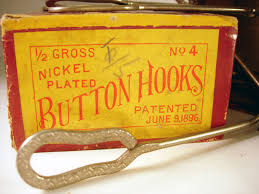 Buttonhook
handles or hookends were made of wood, bone, celluloid,
ivory, steel, iron, and sterling silver. Lengths varied
from two inches to two feet. The price range greatly…
$5 to $60 depending on material, age, condition. There
are rare buttonhooks that can fetch $300. Buttonhook
handles or hookends were made of wood, bone, celluloid,
ivory, steel, iron, and sterling silver. Lengths varied
from two inches to two feet. The price range greatly…
$5 to $60 depending on material, age, condition. There
are rare buttonhooks that can fetch $300.
Price of buttonhooks
include rarity, material of the hook and the handle,
plus condition.
This information is my
opinion only. Thank you for reading my articles. Email
questions.
Have fun shopping and
using antiques.
|
|
What's Hot!!
What's Not!!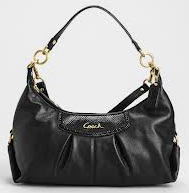
Hot Hot:
- High Quality Leather Purses: These are
not an antique but wanted. Purses like Coach are
highly sought after in the second market to save a lot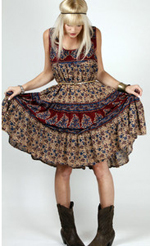 of money.
- Bohemian
Clothes/Hippie Clothes:
These are clothes you can wear. Build your own
fashion look! One bold or subtle piece added to your
wardrobe.
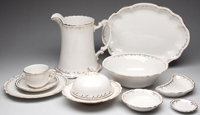
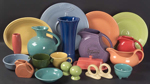
- Homer Laughlin Dinnerware, including Fiesta:
I am a huge fan of Homer Laughlin dishes, and I collect
and use daily. The product line is vast.
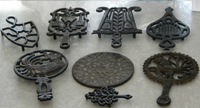
-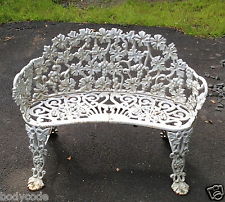 Cast
Iron: Everything, including kitchenware,
farm items and more. Cast
Iron: Everything, including kitchenware,
farm items and more.
WHAT’S NOT SO HOT:
-Milk Glass
-Shot Glasses
-Playing Cards
- Glassware in
general is not selling. Both in single pieces and
sets.
View the archive of Ms. Chesley's
past articles here.
|
|
WHAT THE HECK IS THAT ?-? (Part
2)
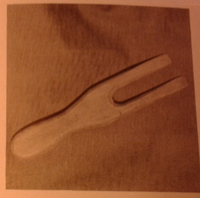
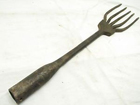
These are considered "primitives". A
primitive is thought to be an early model, simple/crude
or in the early stages of human development. Primitives
served a vital purpose to daily life. Primitives were
hand made with products available in the immediate area.
Their structure may have been simple, but their
task/purpose was important. They are rare in these early
formats. Let's investigate two primitives.
Here is the first primitive item: What the heck is
that ??
Any guesses? No, it is not a pancake flipper or a
kitchen tool of any kind. No, it does not help put on
tight shoes or boots. No, it does not hold open a horses
mouth for teeth inspection. No, it does not comb or
shape a horses tail or mane. What the heck is that ?-?
Answer: This is a very simple, pure, basic... cabbage
planter. Cabbage was first raised from a seed in a
framed garden bed. The seeds became cabbage "sets" as
they grew. The cabbage planter was a hand used tool to
plant the young cabbage sets, one by one, into the soil.
Very time consuming. Usually made of maple or
another hard wood.
Let's look at the next primitive item: What the heck is
that ??
Any guesses? You might be able to
guess this one. No, it is not a back scratcher. No, it
is not a fireplace tool. No, it is not a cast iron stove
tool or ember tool. No, it is not a horse hoof/shoe
cleaner. What the heck is that ??
Answer: This is a fishing gig. A device used to
drag through a school of fish to hook them in the body.
Or, it could be used as a spear-like device for spearing
fish and frogs.
Typically made with 4 prongs. Made of all iron, iron and
brass, or iron with a wood handle. Thank you for reading
my column. All information is my opinion only.
Happy
hunting for treasures.
|
|
WHAT THE HECK IS THAT ??
I am starting a new
series of articles called: WHAT THE HECK IS THAT ?-?
Even an experienced antique collector or farm enthusiast
may not know what these items are or what they were made
to do. They are considered "primitives". A primitive
is thought to be an early model, simple/crude or in the
early stages of human development. Primitives served a
vital purpose to daily life. Primitives were hand made
with products available in the immediate area. Their
structure may have been simple, but their task/purpose
was important. They are rare in these early formats.
Let's investigate two primitives. Here are images of
the first primitive item.
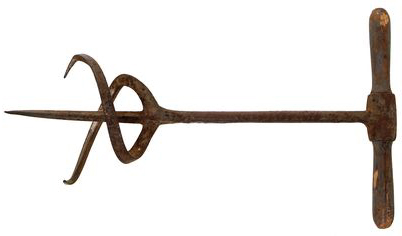
What
the heck is that ?-?
Any guesses? No, it is
not a torture device but it does look menacing. No, it
does not agitate clothes during washing. Notice the
sharp points on the ends.... clothes would be ripped to
shreds. No, it is not a ground hole digger for fence
posts. No, it is not a soil tiller. No, it is not a
wood working tool. No, it is not an ice auger. No, it
is not a weapon used by gladiators such as Spartacus.
What the heck is that ?-?
Answer: This is
called a sugar devil. I said it looks menacing,
hence the name devil. These date to about 1850 to 1900.
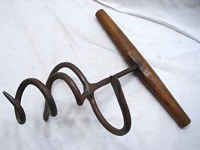 A
sugar devil was used to loosen sugar. What? When sugar
was transported distances, it became compacted in the
wood barrel or large transport containers. The sugar
became hard and unbreakable. The sugar devil was the
answer to break apart sugar into a useable consistency. A
sugar devil was used to loosen sugar. What? When sugar
was transported distances, it became compacted in the
wood barrel or large transport containers. The sugar
became hard and unbreakable. The sugar devil was the
answer to break apart sugar into a useable consistency.
Homesteaders and shop
keepers both used the sugar devil.
Approximate size:
Length was about 16 to 20 inches. Spike width about 8
inches. Handle width about 8 to 12 inches.
Typically made of either
all iron or combo of wood handle and iron base/prongs.
There were usually 2, 3 or 4 sharp prongs. The
spikes/prongs were curved or twisted, often with one
central straight sharp prong.
Let's
investigate a second primitive.
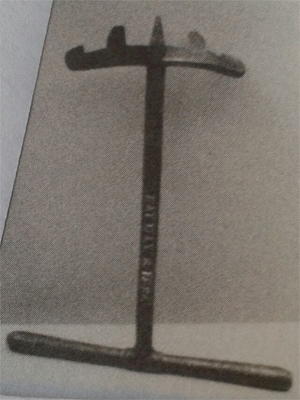 What
the heck is that?-? What
the heck is that?-?
Any guesses? No, it is
not a sugar devil. No, it is not a railroad or steam
engine tool. Notice the curved end... No, it is not a
bark stripper. No, it is not a branding iron for cattle
(ouch). No, it is not a tool to sift through burning
embers. No, it is not an early version of a weed
whacker. What the heck is that?-?
Answer: This is a
fruit auger. It is similar to the sugar devil in
purpose but made uniquely for fruit. Fruit also settled
in large containers during long transports. The fruit
auger would gently break apart the fruit, making it
ready to eat, cook or to sell. The sugar devil could
also be used on fruit, but the sharp prongs of the sugar
devil ruined the fruit. A new primitive item was needed
specifically for fruit. The fruit auger was more gentle
on the fruit products. The handle of the fruit auger
was straight across, but the end that broke apart the
settled fruit was slightly curved to assist in its
purpose. These were most often made of solid iron,
about 10-14 inches in length. Some had wooden handles.
Thank you for reading my
column. All information is my opinion only. I wish you
great antique shopping. The garage sale season will be
done in about a month... so watch for those garage sale
signs now! |
|
Wedgwood Pottery And Two Pieces for Sale NOW
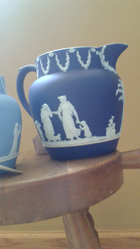 I like Wedgwood
Pottery, I collect Wedgwood, and I display
Wedgwood. Let's investigate. I like Wedgwood
Pottery, I collect Wedgwood, and I display
Wedgwood. Let's investigate.
Way back in 1759, a man named Josiah Wedgwood
began making pottery in England. First, only
useful pottery pieces. A common start for
glassware or pottery makers since people only
bought what they could use. Money was scarce and
decorative items were unaffordable for many.
In 1770, with successful sales, he added
ornamental pottery pieces. They still served a
purpose but were attractive and pretty. His next
step.... overly ornate pottery pieces.
Today, his pottery is not cheap. I haven't seen a
piece in an antique shop for under $150 lately.
Most cost much more... $200 to $3000+ to $7000+
for one simple/small piece of pottery. I collect
his Jasperware. This is BEAUTIFUL pottery. It is
over-the-top in classic beauty and presence, yet
simple and precious. Wedgwood is easily
identifiable with one quick look and can then be
verified by the pottery maker markings on the
bottom. Wedgwood is unique in elegance and design.
Jasperware is sometimes called Cameo Ware. As you
view the pictures, you see why that name is
appropriate. Jasperware is NOT a shiny/glazed
pottery piece. Instead it has a dull or matte
finish. It is fine made unglazed stoneware
decorated with very ornate white figures of
objects, people and trim. It is also called "white
relief". One can see and feel the white risen
paint on top of the matte pottery.
HERE IS A SPECIAL TREAT FOR READERS!!!
I
have TWO pieces of Wedgwood that I am offering for sale,
right now, to you! Pictures are below.
Description/prices are as follows.
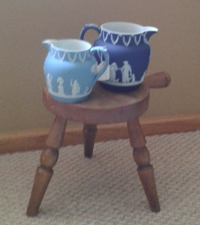 FOR SALE: FOR SALE:
Light Blue Jasperware jug, 4 and 3/4 inches tall,
bottom measures about 3 and 1/4 inches, and width
measures about 6 inches.
I offer this wonderful piece for sale to you at $130.00
FOR SALE:
Dark Blue Jasperware, Cobalt, 5 and 1/2 inches jug.
Dated 1891 to 1898.
I offer this piece for sale at $240.00
To enquire or purchase, please call me at 763-222-6724.
Simple, easy and it is yours.
Let's look at some CURRENT pricing of Wedgwood. These
are my opinion only. It is an expensive line of pottery,
as you will see. The prices on the two pieces for
sale ABOVE, from me, are at steal prices!
Price Examples:
-Bowl 6 3/4 inches, Basalt, floral, handle, Wedgwood
mark: $1,100.00
-Bowl 2 3/4 inches tall, Dragon Luster: $175.00
-Bowl 8 inches, Lahore Luster, riders/animals, ca 1920:
$2,500.00
-Custard Cup with lid 2 1/2 inches, Jasper, blue,
lattice relief: $400.00
-Jug 4 inches, Jasper, crimson, grapes on vine, ca
1920: $800.00
-Jug 6 and 1/2 inches, Jasper, light blue, classic
figures: $285.00
-Pie Plate 8 1/2 inches, crust decor, ca 1800: $600.00
-Vase 10 7/8 inches, Dragon Luster, ca 1920: $8,000.00
-Wall Pocket 9 3/4 inches, Moonlight Luster, ca 1810:
$700.00
-Cup and Saucer, cobalt, pear shape, ca 1937: $175.00
-Brooch 1 inch by 7/8 inch, Jasper, green, 10 K:
$200.00
-Vase with lid, 8 and 1/2 inches, Fairyland Luster:
$3,300.00
-Vase 6 1/4 by 3 inches, cobalt, classical figures:
$225.00
Thank you for reading my articles. Have fun shopping for
antiques and treasures. The garage sale season is still
hot/hot/hot and fun. Call me or text me at 763-222-6724
to purchase your own piece of Wedgwood pottery.
|
|
The
Fenton Art Glass Company
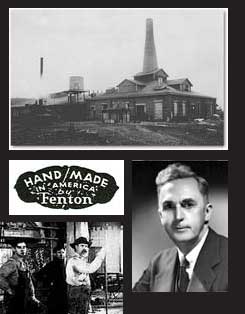
Let’s investigate Fenton
Glass products, starting with the history. It started
in 1905 in Martin Ferry, Ohio. Tow brothers, named
Frank and John Fenton, formed the Fenton Art Glass
Company. The business began a cutting and decorating
shop that used other glass manufacturing companies
“blanks”. Charles Fenton later joined his brothers.
 The
company did well and decided to produce & sell their own
glass products. They built a glass making plant in
Williamstown, West Virginia. By 1907, Fenton was making
its own glass products and the Fenton family ran the
business. Colored glassware was now being produced
including opalescent glass, chocolate glass, Persian
blue glass and pressed glass in green, crystal,
opalescent including topaz/blue/ruby. The
company did well and decided to produce & sell their own
glass products. They built a glass making plant in
Williamstown, West Virginia. By 1907, Fenton was making
its own glass products and the Fenton family ran the
business. Colored glassware was now being produced
including opalescent glass, chocolate glass, Persian
blue glass and pressed glass in green, crystal,
opalescent including topaz/blue/ruby.
Patterns and colors
expanded fast. The Fenton Art Glass Company was a hit!
They made a large profit and their name brand product
was sought. They created beautiful and artistic pieces
of handmade glassware but it was high priced for the
average person to buy.
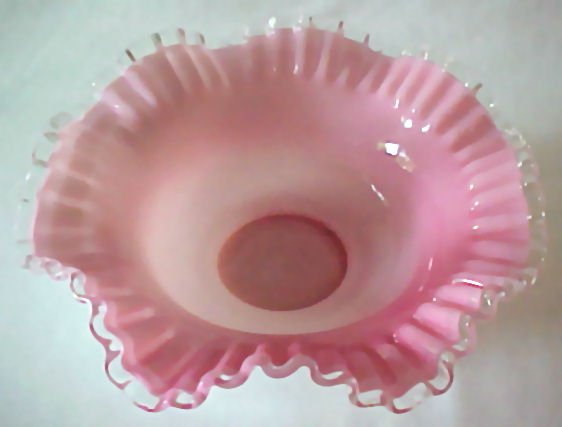 The
Great Depression hit so now Fenton made mostly necessary
glassware including mixing bowls, lamps, reamers and eat
& drink sets. When the Depression ended, they expanded
and prospered with glass items such as Hobnail perfume
bottles. Fenton continued to produce glassware until
about 1980. The
Great Depression hit so now Fenton made mostly necessary
glassware including mixing bowls, lamps, reamers and eat
& drink sets. When the Depression ended, they expanded
and prospered with glass items such as Hobnail perfume
bottles. Fenton continued to produce glassware until
about 1980.
Wow, Fenton has a long &
great history. In my opinion, Fenton pieces have simple
lines, gorgeous cutting & colors. Their pieces are
timeless, easy to use or display today. Let’s
investigate some price points and patters of Fenton
glassware.
First let me say, their
product line included carnival glass, off hand art
glass, stretch glass, non-iridescent glass, patters,
satin glass and opalescent.
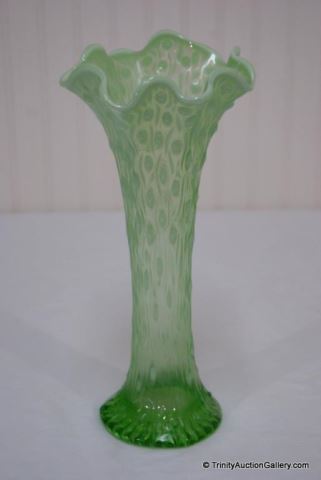 All
price estimates are my opinion only. I am not a Fenton
glassware expert, but I do own several pieces. All
price estimates are my opinion only. I am not a Fenton
glassware expert, but I do own several pieces.
-
Stretch glass, velva rose color, Candlestick #349, 10”
- $70, Bowl #550, 12” flared $90.
-
Wisteria Stretch glass, burgundy color with iridescent
finish, 1921-1928. Candlestick, 10” #649 - $90, Vase
#251, 10” $40.
-
Non-Iridescent, black color, ashtray #848, 3feet,
$15-$20. Basket #1615, 6 ½” $60. Bowl #100, 7 ½”
with 3 feet bottom, round - $19.
-
Non-Iridescent, jade green color, basket #1615, 6” -
$50. Bonbon #543, covered - $60. Bowl #606, 8” with
rolled rim - $25. Bowl #647, 10” flared - $40. Bowl
#1608, 10 ½” deep oval, footed, dolphin design - $100.
-
Pattern, daisy & button #1900 (also called Cape Cod),
numerous colors, plate 8” in crystal $8. Vase 10” fan
in crystal $10 but in Vaseline glass $25.
-
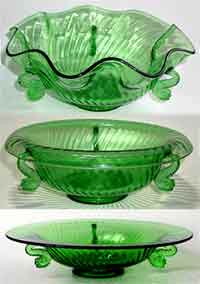 Pattern,
diamond optic, bowl #1502, 12” rolled rim in green or
rose color - $30. In jade color - $40. Cologne #53,
4” in green or rose color - $100+. In aqua color
$140+. Tumbler #1502, 5oz, green or rose color -
$10. Jade or aqua color - $10-$15. Vase #1502, 5”
fan with dolphin handles, green or rose color - $25.
Jade - $30+. Pattern,
diamond optic, bowl #1502, 12” rolled rim in green or
rose color - $30. In jade color - $40. Cologne #53,
4” in green or rose color - $100+. In aqua color
$140+. Tumbler #1502, 5oz, green or rose color -
$10. Jade or aqua color - $10-$15. Vase #1502, 5”
fan with dolphin handles, green or rose color - $25.
Jade - $30+.
-
Pattern, spiral optic, bowl #1503, 10” flared, green
or gold color - $25. Rose color - $20. Goblet #1503,
9oz, green or gold - $10, rose - $20.
Remember, all prices are
my opinion only. Have fun shopping for the treasures
that catch your eye whether the cost is $5, $20 or
$200. Buy what you love and use it or display it.
Deb Chesley
Antique Dealer/Collector
|
|
Bibles
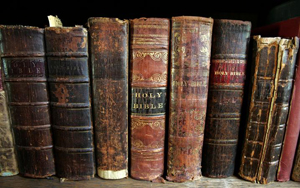
One book is highly
collectible, revered and valued above all else.
Its value is multifaceted. It is the Bible.
Let's explore:
Today, we have numerous options of how to
view/read/see/hear media. There are Ebooks,
downloading, audio books and more technology.
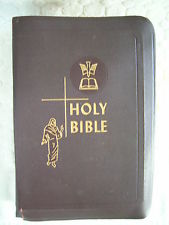 I
am old school. I want a paper book. I
want to feel a paper book in my hands. I want to
smell the musty scent of aged paper. To hold the
physical weight of the words. Once a paper book is
opened, there is a right side and a left side separated
by a middle binding. These pages reveal black ink
letters printed on thin white sheets of paper.
This is a paper book. I
am old school. I want a paper book. I
want to feel a paper book in my hands. I want to
smell the musty scent of aged paper. To hold the
physical weight of the words. Once a paper book is
opened, there is a right side and a left side separated
by a middle binding. These pages reveal black ink
letters printed on thin white sheets of paper.
This is a paper book.
The Bible, with its many editions, languages, sizes and
versions is the most published book in the world.
My Random House paper dictionary dated 1988 defines the
Bible as:
-
The collection of sacred writings of the Christian
religion, comprising the Old and New Testaments.
-
The collection of sacred writings of the Jewish
religion, comprising the Old Testament only.
-
The sacred writings of any religion.
-
A book accepted as final authority.
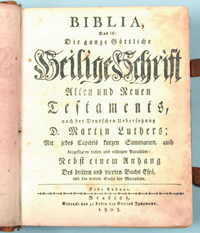 Bible
collecting or just buying one edition for personal use
is on the upswing. Price factors include age,
condition, material quality, size, language, version and
more. Here are a few prices. These prices
are my opinion only. Bible
collecting or just buying one edition for personal use
is on the upswing. Price factors include age,
condition, material quality, size, language, version and
more. Here are a few prices. These prices
are my opinion only.
-
1805, German Bible, 8x10 - $75
-
1846, The Illuminated Bible, 8x10 - $150
-
1850, Bible printed in Philadelphia, PA - $30
-
1854, Holy Bible, Philadelphia, PA,
comprehensive Bible, gilt emb. leather cover -
$35
-
1950, Family Bible, with illustrations,
with hand written notes of births and deaths -
$15
-
1970, The New American Bible, Saint Joseph Edition - $8
Thank you for viewing my article.
Have a great 2015 and have fun shopping for antiques.
Deb Chesley
Antique Dealer/Collector
|
|
Egg
Cups
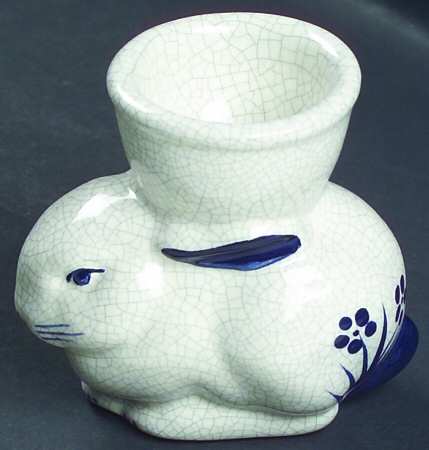
This is a hot
collectible. Egg cups are unique, useable today, small
and easy to display. Prices range from $3.00 to several
hundred or a thousand dollars. Some egg cups are very
old and rare and thus demand a high price. Let’s
explore…
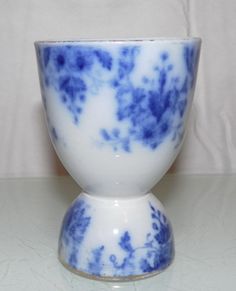 Any
and all antiques intrigue me. Egg cups sound so basic
and simple but once you get in to the details, material,
age…wow!! Egg cups are a fun and diverse collectible. Any
and all antiques intrigue me. Egg cups sound so basic
and simple but once you get in to the details, material,
age…wow!! Egg cups are a fun and diverse collectible.
Some egg cups are one
piece. It’s a base that the egg sits on top of. Some
egg cups are two pieces. An egg cup is just a 3 to 4
inch vessel to hold an egg at your meal. A daily staple
way back when, (for those who could afford eggs), to
hold your egg for eating.
Collectible categories
include basic, chintz, art deco and many more. Egg cups
can be used every day, now, in your kitchen. Or, just
display and enjoy their beauty.
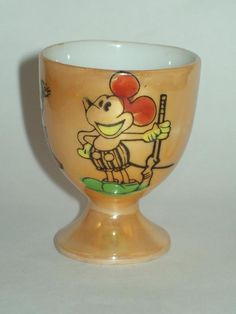 Some
price estimates: Some
price estimates:
-
Egg Cup, Dedham Pottery, Massachusetts, Rabbit - $150
-
Egg Cup, Mickey Mouse, Sombrero, 1930’s, 3” - $100+
-
Egg Cup, English Flow Blue - $75+
-
Egg Cup, Marilyn Monroe, New, 1993 - $50
-
Egg Cup, Goblet style, Apple, Franciscan - $25
-
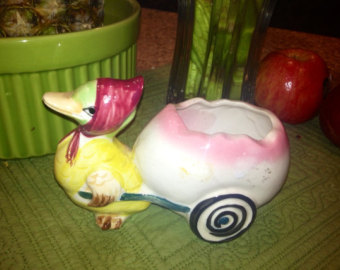 Egg
Cup, Railroad, California Poppy - $175+ Egg
Cup, Railroad, California Poppy - $175+
-
Egg Cup, Duck pulling an egg cart, Japan - $18
-
Egg Cup, Hobnail, ruby flash - $50+
-
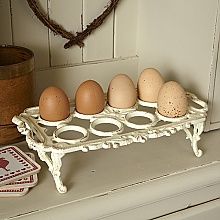
Egg Cup, Wrought iron, 1850 $45
-
Egg Cup, Blueberry patter, Stangl - $25
All
prices are my opinion only.
Thank you for reading my articles, have fun shopping for
antiques and learning about
 history.
It is an endless pursuit. history.
It is an endless pursuit.
Antiques With Attitude,
Deb Chesley
Antique Dealer/Collector
|
|
MARBLES
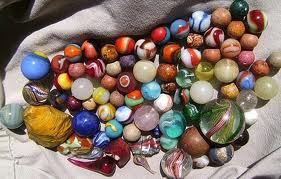
Marbles are a child’s
toy and an adult’s collectible. They are round,
colorful, tiny and shiny. Let’s explore!
Marbles became a toy in
about 1850. The materials used to make them include
natural stones, pottery, glass and china.
There are three main
categories: antique, machine made, contemporary. Then
it gets complicated as there are so many subdivisions,
different varieties and types. Sizes vary, but most
common are ½” to 1”.
Here are just some of
the sub-categories: Agates, bloodstone, chambroth,
clay, comic strip, end of the day, lutz, mica,
onionskin, peppermint swirl, ribbon swirl, steelies,
sulfides, Vaseline. Each of the categories are
interesting and diverse.
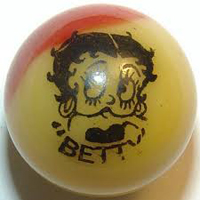 One
example is sulfide marbles. Sulfide marbles have
a frosted white figure in the center. This is my fav.
Inside the center of the marble is a tiny white animal
or bird or comic character such as Betty Boop. One
example is sulfide marbles. Sulfide marbles have
a frosted white figure in the center. This is my fav.
Inside the center of the marble is a tiny white animal
or bird or comic character such as Betty Boop.
Second example is the
peppermint swirls. These are opaque glass of red,
white and blue swirled together. Always,
red/white/blue.
Third example is the
clambroth marble. I would describe this as a
stripped or lined marble. It’s opaque glass with lines
evenly spaced from top to bottom.
I am not a marble
collector. I have purchased and sold maybe a dozen
marbles for profit. I do know that condition is
most important. Why? Think of how marbles were used.
In the game, you shoot one marble at another. This
often resulted in damage, cracks, nicks. So, a mint
condition marble is a prize today. You need to watch
out for reproductions too.
A marble is just a tiny
toy with big value in some cases. Let’s review some
price ranges. All prices are just estimates and in my
opinion only.
* Sulfide, bird, 2” --
$100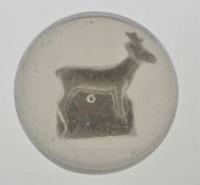
* Sulfide, deer, 1 ¼
-- $150
* Sulfide, fox, 1 ½ --
$130
* Sulfide, chicken, 1
¼, -- $70
* China, decorated,
glazed, apple, 1 ¾ -- $600
* Sparkler, Multicolor,
Akro agate -- $15
*
Agate,carnelian, 1 ¾, -- $20
* Comic,
Betty Boop -- $200
* Lutz, black glass,
opaque -- $175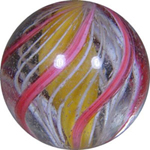
* Lutz, clear swirl, ¾
-- $70
* Mica, blue, 7/8 inch,
$40
* Onionskin, 1 7/8 --
$250
* Onionskin, ¾ ,
pink/yellow/blue/white lines -- $50
* Cat eye, banana,
Peltier, 1” -- $2
* Swirl, ribbon core, 1
¾ -- $200
* Corkscrew, Popeye,
akro agate, 5/8 -- $25
Thank you for reading my
articles, have fun shopping for antiques and learning
about history. It is an endless pursuit.
Antiques With Attitude,
Deb Chesley
Antique Dealer/Collector
|
|
Rhinestone Jewelry
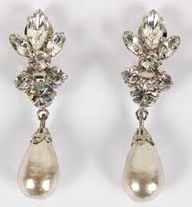 I
fondly remember Grandma’s rhinestone necklace, my Mom’s
dangle rhinestone earrings, and the vintage rhinestone
brooch that I wear year-round on all types of clothing
and accessories. Rhinestones are fun! They are shiny.
They are versatile. They are inexpensive and easy to
find. The period from 1920 to 1960 was the peak of
their mass production. They were popular then and
popular today. They were cheap then and cheap today.
Rhinestones are simply timeless. Let’s explore. I
fondly remember Grandma’s rhinestone necklace, my Mom’s
dangle rhinestone earrings, and the vintage rhinestone
brooch that I wear year-round on all types of clothing
and accessories. Rhinestones are fun! They are shiny.
They are versatile. They are inexpensive and easy to
find. The period from 1920 to 1960 was the peak of
their mass production. They were popular then and
popular today. They were cheap then and cheap today.
Rhinestones are simply timeless. Let’s explore.
Let’s start with the
basics. What is a rhinestone? It is hard, bright,
leaded glass stone backed with foil or tin. The backing
is a thin metallic layer. The reason for the foil or
tin backing is that glass does not reflect light from
the interior. The backing stops the light from going
right through the hard glass. The backing refracts or
bounces the light of the glass. The backing can be
tinted to make different color shades.
People began to call
these high lead glass stones by many names such as
simulation, glass flux, false stone, Austrian crystal,
paste, brilliant and rhinestones.
In the 1920’s, few could
afford expensive gems or diamonds. But… rhinestones
were cheap to make and sold at a low price.
Manufacturers advertised these sparkling glass pieces as
“imitation diamonds that anyone can afford”. Their
popularity grew. The number of manufacturers producing
rhinestone jewelry grew quickly. Higher-end jewelry
designers entered the market and stayed in the market
because of good sales. Rhinestones were a hit and
stayed in vogue though to about 1960. Many
manufacturers continued to produce and sell rhinestone
jewelry, and they still do so.
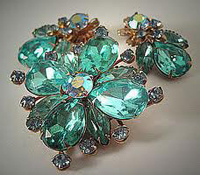 In
the antique shops today, I see a wide variety of items
and prices including necklaces, earrings, dress clips,
brooches/pins, shoe clips, sweater clasps, even tiaras.
Some are dainty/small and some are gaudy/large and some
are WOW. Back in 1930, one could buy a rhinestone
brooch for $2. Today, that brooch might sell for $25 in
a shop. In
the antique shops today, I see a wide variety of items
and prices including necklaces, earrings, dress clips,
brooches/pins, shoe clips, sweater clasps, even tiaras.
Some are dainty/small and some are gaudy/large and some
are WOW. Back in 1930, one could buy a rhinestone
brooch for $2. Today, that brooch might sell for $25 in
a shop.
The less expensive
pieces are made with inexpensive metals. The better
quality pieces are made with gold plate, sterling silver
or a brush-over silver. Having a manufacturers mark
adds to the value. Original boxes also add value. Hand
set stones into the prongs are more expensive then the
glued/pasted into the tin backing.
It’s that glorious
sparkle, the glimmer, and the fire of colors that
attract people to rhinestone jewelry.
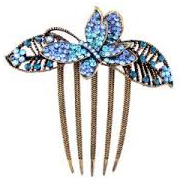 Here
are some price references: Here
are some price references:
-
Butterfly pin, gold
plated, light blue rhinestones - $18
-
Butterfly pin, clear
rhinestones with red eyes - $15
-
Hinged plastic bangle
with inlaid rhinestones - $50
-
Sunburst design pin -
$18-$25
-
Circle shaped brooch -
$15
-
Saxophone shaped
brooch - $45
-
Necklace, bracelet,
earrings – matching set - $80
-
Set of 2 dress clips -
$45-$75
-
Pearl earrings with
rhinestone accents - $10-$30
-
Earrings, shoulder
dusters (extra long) - $20-$40
-
Long dangle earrings -
$10 - $40
-
Clip-back earrings,
large purple stones - $30
-
Signed Boucher pin -
$100-$200
-
Signed Trifari
ballerina pin - $100
-
Signed Trifari Silver
plated, set brooch and earrings - $100
-
Signed Trifari, gold
plated swag shaped brooch - $40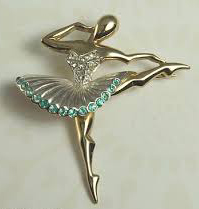
-
Signed Kramer, tennis
bracelet - $50
-
Signed Kramer, small
brooch - $35
-
Signed Hollycraft,
tiered Christmas tree pin - $30-$50
-
Signed Boucher pin -
$100-$200
Price estimates are just
my opinion. I encourage you to visit your local antique
shops and search out these wonderful fake diamonds.
Vintage rhinestone jewelry wears well today. A little
sparkle here or there. Rhinestones are timeless.
Thank you for reading my
articles, have fun shopping for antiques and learning
about history. It is an endless pursuit.
Antiques With Attitude,
Deb Chesley
Antique Dealer/Collector
|
|
 Here
comes Peter Cottontail… Here
comes Peter Cottontail…
The first things that
come to mind regarding older Easter collectibles are
candy containers, rabbits, baby chicks, eggs, and
Germany!
Easter is both a
religious and secular occasion. It is an important
religious holiday and time of year. In this article, I
am discussing EASTER COLLECTIBLES AND ANTIQUE ITEMS!
The iconic Easter Bunny
is center stage. The bright colors on eggs and Easter
baskets soon followed. The Easter season offers a
variety of collectibles for you to
buy/collect/use/display. Look back to perhaps 1900,
1925, 1940, 1950 and remember.
Let’s
explore Easter Collectibles!
Germany is well noted
for being the pioneer in this industry, specifically
with candy containers but the whole industry as well.
German companies made the first Easter-themed candy
containers in the early 1900’s (and before in smaller
quantities) often shaped as rabbits, ducks and chicks.
The items sold well, so the industry expanded. Quality
was high. Germany remained the leader in Easter items
for many years.
Japan and other
countries entered the market to compete and make a
profit. USA was a late joiner, waiting till the profit
factor was well documented. Commercial promotions began
and “The Easter Season” was created for profit.
There were buyers then,
there are buyers today. German items from the turn of
the century are prized. Condition, country made,
availability and size are key price factors today.
The USA’s late entry
into the market impacts what we collect, see and pay for
these items in today’s market. The “Made in USA” items
tend to be newer, less expensive, more common and easier
available – typically from 1930 to 1950. I keep my eye
on those older German made items.
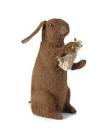 Rabbits
are consistently in high demand. Some have painted-on
clothes, fabric clothes or no clothes. Once you start
finding these treasures in your local shops or on-line,
you will see all the varieties and different age/place
of origin indicators. The more you learn about a
particular field of antiques, the better shopper you
become. Rabbits
are consistently in high demand. Some have painted-on
clothes, fabric clothes or no clothes. Once you start
finding these treasures in your local shops or on-line,
you will see all the varieties and different age/place
of origin indicators. The more you learn about a
particular field of antiques, the better shopper you
become.
Materials may include:
Glass, metal, tin, celluloid, cloth, mohair, straw, hard
plastic, molded cardboard, pulp, egg-carton material,
pressed cardboard, paper and papier-mache and ceramic.
An often overlooked
Easter collectible is post cards - they are bright,
cute, even funny, old, authentic, made with high quality
materials/ink/designers/drawers, and still inexpensive.
In contrast, the inexpensive 1970-2000 Easter items are
worth $2-$4 today, made with cheap materials and have no
realistic price increase potential. I sell mine at
garage sales (and they still don’t sell).
A FEW
EXAMPLES OF PRICES: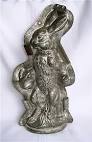
-Chocolate mold, tin,
chick, 3” -- $25
-Cake mold, cast iron, lamb shaped, 2 pc’s, 13” -- $80
-Candy container, begging rabbit, brown, compo material,
glass eyes, German, 1900- 1930, 5”-9” -- $90 to
$200
-Candy container, begging rabbit, pulp, base, US, 1950
-- $50
-Candy container, egg, papier-mache, German, 4” -- $35
-Candy container, rabbit with basket in arm, glass, USA
-- $35
-Candy container, rabbit with flowers, composition,
German, 7” -- $100+
-Sitting rabbit with mohair, compo, early 1900’s,
German, 4-6” -- $150+
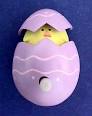
-Chick or duck, celluloid, 3 to 8”, some plain, some
ornate -- $20-$100+
-Lamp, Morton Pottery, US, about 1945 to1965, Easter
Bunny with carrot -- $30
-Ceramic Easter egg and bunny, 2-pc, newer (maybe 1960
to 1980) -- $15
-Sheet music, Easter Parade -- $6
-Post cards, Easter theme, $5-15
-Toy, windup, rabbit, tin with fur, Japan, 5” -- $50
NOTE: I
do not specialize in this area. I do appreciate these
items and own a treasured few pieces. I display my
Easter collectibles for a full month before Easter Day.
I use some Easter-themed serving dishes during the
Season also.
Thank you for reading my
articles, have fun shopping for antiques and learning
about history. It is an endless pursuit.
Antiques With Attitude,
Deb Chesley
Antique Dealer/Collector
|
|
Scales – Weighing Devices
Scales are an important
part of today’s business world, manufacturing processes
and home life. We buy things with the weight printed on
the package/label. We take the measurement for granted,
assume it is correct and per code/regulation.
Think back, way back in
time when people were buying, selling or trading goods
in the 1800’s and early 1900’s. Think of a gold miner,
a lumberyard, a flourmill, a fisherman, a jeweler, a
blanket maker/weaver, a general store or a fur trader.
They want to sell a day/month/years worth of work and
labor. What is a fair price to sell? Will someone pay
more to me because my haul (my products, my goods) is
larger, bigger, heavier and better quality? The future
buyer had the same questions but from the reverse view.
Weight was the solution. The answer was a
scale.
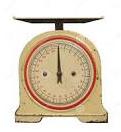 The
evolution of the scale system is an interesting
progression – from primitive to reliable, from home-made
scales to standardized models used throughout an entire
industry, from generic measure anything scales to a very
specific scale designed for a specific item. The
evolution of the scale system is an interesting
progression – from primitive to reliable, from home-made
scales to standardized models used throughout an entire
industry, from generic measure anything scales to a very
specific scale designed for a specific item.
With a scale, a buyer or
seller could weigh anything including sugar, gold,
coins, flour, salt, gunpowder, pelts, cotton, grain,
wheat, seed, spices, eggs, medicine and a new born baby.
Each unique industry
over time began to learn and refine the benefits
financially of weighing items before they
bought/sold/traded/manufactured. Hence, the customers
learned the financial benefits as well. I can’t
describe the depth of the importance of the weight
system to our history.
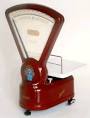 Consider
a shopkeeper in 1910, a chemist in 1870, a doctor, a
grain farmer, a dairy, the post office, the local bank.
Every type of industry learned to price according to
weight. It took time for the weighing practices to
spread from town to town, from North to South and East
to West. It took time for the weight practices to
become standardized and “understood” in each industry.
If a salesman/business could afford a scale, it was
bought. Consider
a shopkeeper in 1910, a chemist in 1870, a doctor, a
grain farmer, a dairy, the post office, the local bank.
Every type of industry learned to price according to
weight. It took time for the weighing practices to
spread from town to town, from North to South and East
to West. It took time for the weight practices to
become standardized and “understood” in each industry.
If a salesman/business could afford a scale, it was
bought.
Customers learned to buy
and compare price/quality according to weight. That is
what I do every time I shop at Cub Foods or Costco. I
want to be a smart shopper. Scales help.
PRICING AND COLLECTING
Early scales were made
of whatever materials were available including cast
iron, marble, wood, brass, steel, glass, nickel-plate,
plastic and bronze.
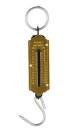 Early
scale types include: unequal arm balance, double beam,
hanging equal arm balance, spring balance, permanent
attached weights, countertop generic, hanging spring
balance, hook balance, even balance, even balance with
trip, dial front, lever, arrow point, pendulum... and
more. Early
scale types include: unequal arm balance, double beam,
hanging equal arm balance, spring balance, permanent
attached weights, countertop generic, hanging spring
balance, hook balance, even balance, even balance with
trip, dial front, lever, arrow point, pendulum... and
more.
With each new invention
or refinement of a scale, the older model became
outdated. These outdated scales make collecting today
more fun! New material, new math and new sciences
brought cheaper, better, lighter, mass-produced scales
to homes, industry, farms, groceries and every day life.
Here are a few prices of scales today:
-
1910 Grocers countertop, unequal arm balance, by
Fairbanks, $80+
- 1908 Union Scale, countertop, single beam, $100+
- Common family/at home scale,
referred to as a family dial type, $20-$35
- Family Scale, The Daisy, 11” x 8”, $70+
- Common hanging spring balance, $10-$40
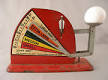
- Egg Scale, Jiffy-Way, made in Owatonna MN, Patent 1940, 6”x7”, $15-$30
- Egg Scale, Acme, made in St. Paul MN, aluminum, $15-$30
 All
prices are my opinion only. All prices depend on age,
rust, nicks, condition, brand, materials, and other
factors. All
prices are my opinion only. All prices depend on age,
rust, nicks, condition, brand, materials, and other
factors.
Thank you for reading Chesley’s Antique Corner.
Have fun collecting and using antiques.
|
|
It
Happened….
We all have memories -
some good, some bad. Events occur all around us every
day that impact our lives. This article lists some
events, issues, tragedies, inventions, people and things
that might have influenced you, awed you or changed
you. Some listings are political, others are
monumental - even tragic, others are just popular
culture, interesting or silly. Whether we like it or
not, events occur and time changes.
Close your eyes right
now and think about the past. Go back to last week, 50
years, 100 years ago. What do you see? What do you
remember? Here is my take on…. It happened.
50 YEARS AGO
 -
Easy Bake Oven -
Easy Bake Oven
- Beatles first USA #1 hit
- President John F. Kennedy is assassinated in Dallas,
TX on
Nov 22, 1963. Lee Harvey Oswald is killed 2 days later.
Lyndon B. Johnson becomes President.
- Bubble Wrap
- Zip code system takes affect in the post office
- Tatum O’Neal is born
- Sandra Bullock is born
- Martin Luther King’s speech “I have a dream” on Aug
28, 1963
75 YEARS AGO
- In Germany and
Austria: Nov 9, 1938, Kristallnacht – The Night of
Broken Glass. The
beginning of Nazi hate crimes on Jews. No one should forget.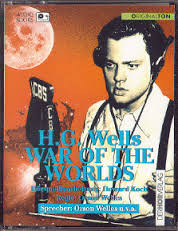
- Orson Welles famous
radio broadcast - “War of the Worlds”. Story of
Martians invading earth heard by 6 million radio listeners. Turned to
panic. Power of the media. Oct 30, 1938.
80 YEARS AGO
- Albert Einstein
arrives in USA. In 1933, Albert Einstein fled Nazi
Germany and
blessed us by ending at Princeton.
- Franklin D.
Roosevelt’s first inaugural speech: “This great nation
will
endure…prosper…the only thing we have to fear is fear itself…”.
Uplifting and needed
speech. FDR was a four-term president.
 90
YEARS OLD 90
YEARS OLD
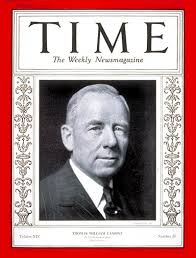
- Time Magazine - with
its recognizable bright red border on every cover.
100 YEARS AGO
-
Famous auto maker, Henry
Ford, creates the first auto assembly line to increase
production and save money. This is 1913, and the retail price of the
Ford car drops
from $850 to $360. Impressive production increase.
150 YEARS AGO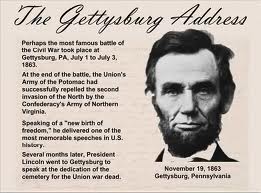
- Abe Lincoln’s speech,
known as the Gettysburg Address, Nov 19,
1863. Topic is “devotion”.
THIS WEEK
- 5 counties in Colorado
voted to approve the creation of a 51st state – yes,
here in the
USA. Is North Colorado to be a new state??? It is in the hand of
Colorado lawmakers
and then Congress.
 -
Minnesota Timberwolves beat the Los Angeles Lakers after
a 23 straight -
Minnesota Timberwolves beat the Los Angeles Lakers after
a 23 straight
losing streak to this team. (rah). This win is great!
Thank you for reading my
article. My grandma always said that times flies.
Now I understand.
It happened.
|
|
WHAT IS AN “ANTIQUE”?
This is an age-old
question (get the pun). People ask me all the time:
What is and what is not an antique. The simple answer …
there is no simple answer. There are various
definitions of the word “antique” and even more
interpretations there of. You can Google to get several
different dictionary definitions.
So, what is an antique?
I started by asking the general public. I went to a
Sears Store and asked customers what they thought an
antique was? Here are some answers:
-
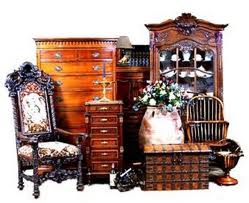 Really
old, maybe with markings on the bottom. Really
old, maybe with markings on the bottom.
-
Over 100 years old and things in England/over seas.
-
A
treasure.
-
Anything passed down through the family generations.
-
Things I can’t touch and can’t break.
-
Grandma’s stuff, dusty, it’s old.
-
Anything I can sell on ebay or Craig’s List
-
1970’s or older, you know, retro things, old things.
-
Heirloom, history, it’s nostalgia. I have a lot of
photos. It’s all family.
-
75 years old or more.
-
Older than me, I don’t know, I like old cars.
So,
what is an antique? Can we define the word?
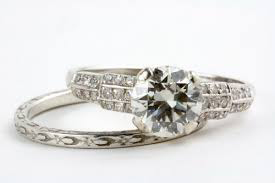 Most
antique shows now promote themselves as an antique
show/craft show\flea market, or an antique fair or an
antique event. Any gamut of words to include what
vendors might sell to make money. Most
antique shows now promote themselves as an antique
show/craft show\flea market, or an antique fair or an
antique event. Any gamut of words to include what
vendors might sell to make money.
Most antique stores
promote themselves as selling antiques and
collectables. A catch-all phrase.
 The
reason for such phrases in the antique business is that
the word “antique” has a broad and varying definition
and meaning. The
reason for such phrases in the antique business is that
the word “antique” has a broad and varying definition
and meaning.
My paper book
dictionary, The Random House College Dictionary, Revised
Edition defines an ANTIQUE as:
"of or belonging to the past, not modern, dating from
an early period, in the tradition or style of an
earlier period. Any work or art, piece of furniture,
or the like, created or produced in a former period.
According to US customs laws, 100 years before date of
purchase."
So what is an antique?
You be the judge. It is something you want to keep and
treasure? Let’s embrace and collect our heritage. If
it has meaning – look to your heart- keep it. That is
what an antique is.
This is my opinion.
Thank you, Deb. |
|
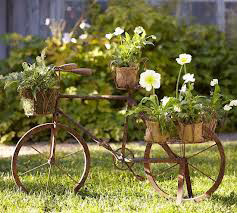
Garden
Décor With Old Stuff and Antiques
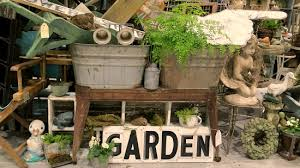
Are your annuals,
perennials and vegetable seeds growing? Here are some
green thumb ideas on how to DECORATE and USE older items
in your gardens. Some of my ideas are useful and some
ideas are whimsical. It’s fun to add something rustic,
a touch of color, a personal theme or just that one
unusual item to your gardens.
These ideas can be
applied to any type of garden: huge/small/lawn, veg/flower/shrubs,
tabletop, patio/deck gardens, or outside your front door
decorations. Items can be nailed or glued to fence
slates or stakes. Items can be inserted between the
greenery directly on the soil both foreground and
background. Use your imagination. I have a 1940’s
washing machine in my garden. Re-purpose and reuse.
Let’s have some fun with
antiques.
Themes:
-Nautical theme: Use ½ an old boat horizontal or vertical, a ships wooden steering
wheel, rope, fish decoys, nets, oars, wicker Creels.
-Hunting theme: Use decoys, paint a bulls-eye, display several arrows – grouping items
is a key to theme decor.
-Cabin theme:
Use old dock wood or any “seasoned” wood, drift wood, a
wooden screen door, life preserver, fishing lures, large
ice fishing lures, a grouping of bird houses.
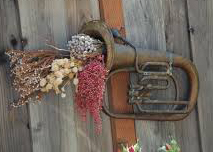 -Your personal
collection theme:
If you collect tobacco tins…nail them on a fence in a
grouping. If you collect beer cans… nail them to
fencing or insert on top of fence posts. They will rust
with time, but it’s fun to show your passion in your
garden. Replace with new tins as needed with weather
age. -Your personal
collection theme:
If you collect tobacco tins…nail them on a fence in a
grouping. If you collect beer cans… nail them to
fencing or insert on top of fence posts. They will rust
with time, but it’s fun to show your passion in your
garden. Replace with new tins as needed with weather
age.
More Garden Décor Ideas:
-Make a name plate or
sign using old wood and metal: “Deb’s Daisies”,
“Chives”, “No Weeds Allowed”, “Garden of Eden”. You
can make the letters with paint, nails, studs, old metal
pieces. Use railroad spikes.
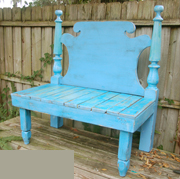 -Common but adds a
twist: Milk can or milk stool – décor or planter.
Whicker chair – paint and remove the seat to insert a
pot. Wooden chair of any kind painted. Splash on some
bright paint, re-purpose and add some personality. -Common but adds a
twist: Milk can or milk stool – décor or planter.
Whicker chair – paint and remove the seat to insert a
pot. Wooden chair of any kind painted. Splash on some
bright paint, re-purpose and add some personality.
-Wooden bench: Keep ¾’s
of the bench to sit on, but remove 2 seating slates to
insert a pot. Or, remove the entire seating area and
use as a planter. A chair can become a planter.
-An old wheel barrel,
plow, sled, barrel, wooden box/crate or wooden pop box,
pail, water can.
-For tabletop: Plant a
flower in a 1950’s china tea cup with saucer under.
This also makes a nice hostess gift. So simple, so
small, so different.
-Crooks – Think both big
size and small. Use a 5 gallon or 20 gallon crook. Use
a 5” x 5” size crook on your patio table.
-Tractor Wheels - Wood
or metal, both last for years and years outdoors.
-Whirligigs, Windmills
-- these are “wow” items.
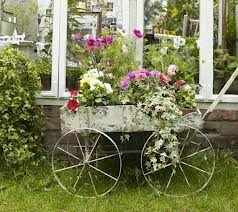 -Old fence pieces -
metal or wood. Any type of old wood such as from a
barn, a floor, window, barrel slats. -Old fence pieces -
metal or wood. Any type of old wood such as from a
barn, a floor, window, barrel slats.
-Rod-iron pieces
-Re-purpose pieces of a
picnic table
-Use a Hoosier cabinet,
vintage kitchen table or shelf unit as a garden table.
-Wood printer drawers
-Old wooden windows
(with or without the glass)
-Almost anything can
become a planter: An old cracked bowl, a mixing bowl,
crockery pieces, bucket, bath tub, a cowboy boot,
military helmet, ashtray, copper kettle.
REMEMBER:
Antiques can decorate
any outside area. It’s your yard – make it yours. Use
your passion and collectibles to accent your gardens.
Always, when decorating, keep it safety first -- rough
edges, nails, sharp corners, doors that can close – keep
it safe for your family and guests.
|
|
What's Hot!! What's Not!! 8/02/13
 Hot
Hot: Hot
Hot:
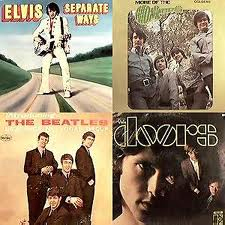
-Vinyl
Records - All types, 45's, 78's.... Irving Berlin,
Devo, ABBA, Frank Sinatra, Dennis Day (My Wild Irish
Rose), Doris Day, The Beach Boys, Eddy Howard
(Stardust), Bruce Springstein. Listen and enjoy.
-Maps on
paper, school house roll down/pull down maps,
globes, atlas.... All hot.
-Military
guns/rifles and attachments.
 -Garden
art and decor - have fun in your gardens and
decorate with unusual items and old stuff. Items not
meant for a garden add color and personal style. -Garden
art and decor - have fun in your gardens and
decorate with unusual items and old stuff. Items not
meant for a garden add color and personal style.
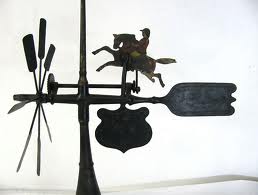
-Whirligigs
-1960's
Blonde Furniture: Bedroom set and mattress head
board, TV stand, end table. The once inexpensive blonde
colored furniture is now expensive.
-1950's
scarves, handkerchiefs, aprons. The colors and
options are endless. Many are signed by the designer.
This is a fun item to collect. Pick a theme or a color
and go for it.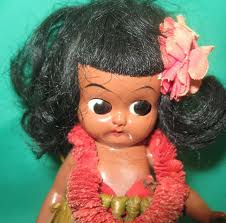
-Hawaii
and tropical items. Think about the Hula Dancer in
a grass skirt as a car dash board ornament- she moved
and shaked as the car drove. Now, go farther. Anything
topical is sizzling HOT.
-Non-matching
dinnerware. China sets are OUT. Buy one plate in
this color and one plate in that pattern. Mix up the
designs and colors. Make your own, personal set to
serve 8 people. -- each one different.
WHAT'S NOT HOT
-Spinning
Wheels
-Collector Spoons
-Silverware sets
-China Sets
-Cheap cast iron, copper, brass -- decor, pots,
knickknacks, whatever, Not HOT.
-Collector Plates
-CD's (not old enough yet)
-Oil Filled Glass
Lamps (basic table-top style). Too common (mass
produced) leads to low price point.
View the archive of Ms. Chesley's
past articles here.
|
|
VALUE OF AN ITEM ??
Notice the 2 question marks above. The value of an item
is always questionable and comes down to who will pay
how much for what -- or -- is it worth more to you to
keep? Some ideas to keep in mind include condition,
age and scarcity. Value is relative. Price is
subjective. Memories are priceless.
Here are some of my thoughts on how to place a dollar
value.
FACTORS TO
CONSIDER
Family value: Ask yourself-- How much
does it mean to keep/treasure/preserve the item?
Perhaps pass the item to a family member rather than
sell? Is there more value to keep or more value to sell
for cash?
Demand: Who wants the product today and
how much will they pay today to obtain the item? Will
the item increase in value in the future?
Scarcity: How many were made and how many
were kept or collected? Think of Beanie Babies or Santa
Bears with the value of near nothing today. Mass
production and mass collecting will decrease value
dramatically compared to a signature by Frank Sinatra
which is much less scarce.
Selling Cost: How much will it cost you
to sell the item via what venue? Costs attached to
selling an item will impact your profit.
Condition: Take an honest look at the
wear and tear. Are there scratches, chips, dents,
discoloring? Collectors/Buyers want mint condition or
mint in the box. These are sought after and will
increase the value of an item drastically.
Age: What time period is the item from?
Is it from 1700 or 1950 or 2000? A desk built in the
1800’s is worth more than a desk built to look like the
old one but built in 1999. The same “looking” item from
a different time period impacts value greatly. Look out
for reproductions.
Need/Use: Can the item be used today?
Does it serve a purpose in the home? An old toaster
that works can still toast toast!
Name Value: Who Just Died or Retired: I
hate to say, but when someone famous passes away, the
value of an item associated with them will increase. We
all know this but don’t want to say it. Painters and
artists are the best example. Do you have an
item/game/toy/doll/record/photo… anything associated
with Dick Clark, Annette Funicello, George Jones. Also,
when a sports star retires, their signed or collectable
items increase in value.
Bottom line is: DEMAND. Basic
economical supply and demand. Money is money. If you
have a rare item that is sought after, it will sell for
more money. If you have an item that is over produced
and not sought after… it will be worth little money –
perhaps less than you paid for it such as Beanie
Babies. |
|
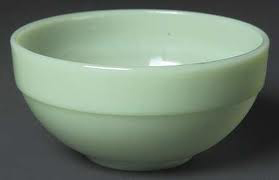
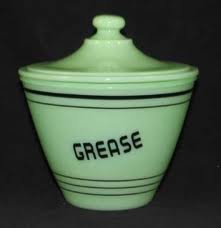
GLASS STORAGE CONTAINERS:
Green Jade-ite, Jadite Green, Jade Green
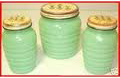 Many
descriptive color names for the same jade green glass
colored storage containers. They are all the same
product with the same use…store and preserve. A very
important need, both yesterday and today. Simple and
easy storage containers for the ice box, the frig, the
shelf or the counter. Staple items needed to be stored
for future use. Many
descriptive color names for the same jade green glass
colored storage containers. They are all the same
product with the same use…store and preserve. A very
important need, both yesterday and today. Simple and
easy storage containers for the ice box, the frig, the
shelf or the counter. Staple items needed to be stored
for future use.
Okay, we all have
Tupperware, Rubbermaid, Glade and other plastic storage
containers in our cabinets. We use these plastic
storage items daily, in the frig, shelf and freezer.
This is today.
Now, think back to a
1930’s or 1940’s kitchen. There is no plastic or
Tupperware, but there is glass storage containers.
First, the ice box. Next, with modern technology and
electricity came the electric refrigerator. Wow, a
modern wonder. Food could be kept cool, stored and
re-used more easily. Multi-purposed storage containers
were purchased. Basically anything needed in the home
or kitchen was made in a glass storage container.
Jadite green was an
inexpensive glassware. During the Depression when money
was tight and no food scrap could be wasted, glassware
companies manufactured storage containers. They were
made in several colors, but jade green is a HOT
collectible today. The color is typically a light to
medium jade green shade.
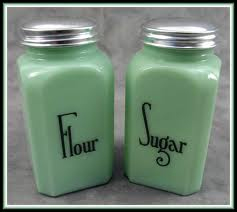 These
containers were cheap. They were used to store items
such as flour, sugar, salt, butter, coffee, grease and
more. Affordable and multi-purposed. Made to fit a
1930 to 1950 frig. Leftovers were stored and nothing
was wasted or spoiled. Staples were kept on the shelf
or in a cabinet, preserving to use in the future was
vital. These
containers were cheap. They were used to store items
such as flour, sugar, salt, butter, coffee, grease and
more. Affordable and multi-purposed. Made to fit a
1930 to 1950 frig. Leftovers were stored and nothing
was wasted or spoiled. Staples were kept on the shelf
or in a cabinet, preserving to use in the future was
vital.
Most jade green storage
containers had flat tops. Think about the importance
of flat tops – easy to stack and minimal space used.
Even canisters had flat tops, butter dishes and more,
all for efficient storage. Flat tops were economically
wise.
I would say Jadite Green
storage containers are best known for being affordable
and useable. Today, we collect and respect these
precious, vintage glass items.
Article by:
Deb
Chesley
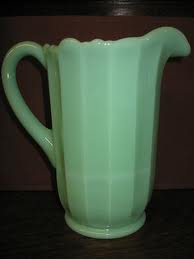
CURRENT PRICES – Jade Green Storage, IN MY OPINION:
-
Frig Container, 4x4”, Jeannette
Glass Company, with lid=======$38.00
-
Frig Container, 4x4”, Anchor
Hocking, with clear lid========= $40.00
-
Frig Container, 10x5”,
Jeannette=======================$80.00
-
Sugar Bowl with lid, Jane Ray
pattern ================== $22.00
-
Sugar Bowl, no lid, Jane Ray
pattern ====================$12.00
-
Child’s Canister Set, 3” tall,
4-pieces, all with lids ===========$350.00 (yep)
-
Grease Jar, Screw on lid,
Fire-King ====================$55.00
-
Sugar Canister, Square Shape,
Jeannette =================$75.00
-
Mixing Bowl, 6”, Swirl pattern,
Fire-King ================$20.00
-
Mixing Bowl, 6”, Anchor Hocking
===================== $33.00
-
Bowl, 8” with vertical ribs,
Jeannette Glass Company =========$45.00
-
Bowl, 11”, Laurel pattern, McKee
Glass Company ==========$70.00
|
|
The “1000 Mile Boot” Returns --
Wolverine Boots
The 1000 Mile Boot is a
heritage line of high quality leather boots reintroduced
for current sale. Yes, you can buy a new pair through
the Wolverine Company. Myself, I love the name and the
meaning of long wear: 1000 miles! The
look of the new footwear is outstanding! A vintage
look/design with high quality leather. Once you see
the footwear and its old-style charm, you will
understand my attraction as an antique dealer. True
nostalgic.
HISTORY
Back in 1883, two men
opened a small leather goods company based in Michigan,
named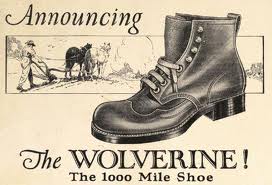 the Hirth-Krause Company (Wolverine). The business
prospered in 1914 with the introduction of an innovative
shoe/boot line nick-named the “1000 Mile Boot”. It
quickly became a big seller due to its comfort,
durability and more durability. Basically the product
was high quality leather for the feet. It didn’t matter
if you lived in the big city, on the range or on a farm
-- footwear that could last for years was a necessity.
the Hirth-Krause Company (Wolverine). The business
prospered in 1914 with the introduction of an innovative
shoe/boot line nick-named the “1000 Mile Boot”. It
quickly became a big seller due to its comfort,
durability and more durability. Basically the product
was high quality leather for the feet. It didn’t matter
if you lived in the big city, on the range or on a farm
-- footwear that could last for years was a necessity.
In the 1930’s, Wolverine
began advertising its boot as a money wise “smart
choice” during the depression. It will last for 1000
miles!
Modern Years
In 2009, because of our
craze for old things and nostalgic items to buy and use,
the company reissued its ORIGINAL DESIGN from 1914 for
high quality boots and shoes. Three years later, due to
high demand and great sales, Wolverine expanded the
vintage line, adding new styles but still with the
old-time look of the 1914 shoe/boot. All newer designs
were inspired by that great century-old craftsmanship,
but they also use today’s technology for more foot
comfort. Technology is updated, but the product’s
integrity remains. This is one of the finest shoe/boot
lines available in the world. I guess that I am not the
only person who is attracted to the name: “1000 Mile
Boot”.
Collectors -- Search for the ORIGINAL Old Boots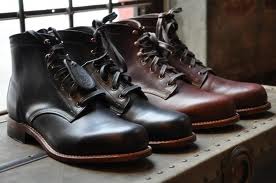
Many antique dealers
and collectors of
clothing, linens, apparel, shoes/boots search out the
original 1000 Mile Boots – either in a pair or one
single boot – both are desired. The patina (color) of
the old leather is rich/deep. Many old boots still have
soles in good condition ??…. good condition soles, I
would guess that they didn’t walk that 1000 miles when
bought back in 1914.
Places to search for
vintage leather boots include auctions, estate sales,
antique stores, eBay or other online sites.
A single leather
shoe/boot can be displayed on a dresser in a bedroom
next to an old family photograph, or in a family room as
part of a western themed collection. Decorating options
are expansive. Each collector has his own way to
display, use or sell his finds. I have a late 1800’s
ladies tall leather lace-up boot on display with family
photos. Antiques make great decorating items.
Website:
www.wolverine.com
Phone: 1-866-699-7369
New Prices: Start at about $350 – today for new
footwear.
Vintage Prices: Range greatly but can start as low as
$60.
Deb
Chesley
|
|
WHO IS RICHARD SEARS?
Hint: Born 1863 in Minnesota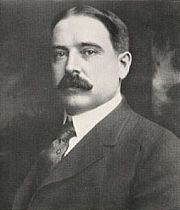
Hint: An agent for the Minneapolis & St. Louis Railroad
Hint: R.W. Sears Watch Company
Hint: Famous Catalog
Giveaway: Alvah Roebuck
Answer: Sears, Roebuck & Company founder
This
is my nod to a famous Minnesota entrepreneur, Richard
Sears and his famous catalog.
CURRENT CATALOG PRICES:
I love the history and
the memories of these catalogs… my grandparents keeping
the catalog for months on the farm – rereading the same
pages over and over. Their catalogs quickly obtained
soiled corners from so many page flippings.
Estimated current retail value of a few Sears & Roebuck
Company catalogs:
- 1912 Volume #125, 1458 pages, perfect
condition, $175
-1940 Fall/Winter, 1182 pages, perfect
condition, $30
-1922 General Merchandise, 1176 pages,
perfect condition $70
Current retail values
drop fast if the pages are well used, dirty, torn/cut,
ear-marked/folded or written on. Collectors want
“perfect” to “very good” condition. Above are estimated
retail prices and vary greatly depending on the antique
shop you visit.
Sears, Roebuck & Company
Richard Sears was born
in 1863 in Stewartville, Minnesota, a rural farming
community, his family later moved to Spring Valley. The
Railroad entered the city of Spring Valley, changing
rural areas forever. Nicknamed “The Iron Horse” trains
changed how people traveled and also how product to buy
or sell was transported.
The railroad also had an
impact on Richard Sears – he saw opportunity and took
it. One of his first jobs was at the Minneapolis & St.
Louis Railroad Company. This did not satisfy him. He
knew he could do more.
In 1886 in Redwood
Falls, a jewelry store owner refused to pay for 12
pocket watches that a vendor was trying to sell. The
jeweler didn’t think he could sell them for a profit.
Richard Sears observed the encounter by pure chance and
then bought the pocket watches from the vendor. He paid
$144 for all 12 watches. He resold the watches for a $2
profit each. Richard Sears earned a $24 profit and
now saw his calling: He would buy and sell. Yep, $24
dollars in profit started the HUGE Sears Company.
Richard was only 23 years of age and just getting
started.
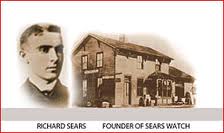
He quit the railroad job
and moved to Minneapolis where he started the R. W.
Sears Watch Company. The watch was the only product so
far that he had purchased and then re-sold. How did he
advertise in 1886? He placed ads in farm publications
and started mail-order marketing. Another nod to this
Minnesota businessman.
As his business grew in
the 1880’s, still selling watches, Richard Sears moved
his headquarters to Chicago-- the railroad center of the
entire USA. The railroad grew and so did Richard’s
dreams and company. He met and hired a simple watch
repairman named Alvah Roebuck. Alvah became a friend
and business partner. Together, they expanded their
product line and launched a new company called Sears,
Roebuck & Co.
Now a successful and
still young adult, he realized that the rural
farmers/families (specifically where he grew up in
Minnesota) had very limited places to buy basic everyday
items needed for the kitchen, the farm or the barn
-products required to run the home and farm. The rural
family had many buying needs and few buying options.
Sears business
solution: Buy more product and sell more product. But
it is 1890, how to reach that rural buying market? His
answer, the catalog.
THE
FAMOUS AND REVOLUTIONARY CATALOG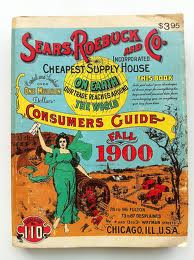
I call it ”THE
CATALOG”. Started in 1890, the Sears, Roebuck &
Company Catalog became a staple for people in rural
areas, first in the States of Minnesota, Wisconsin,
North Dakota, South Dakota, Illinois and then expanding
across the US.
Catalog viewers would
wish, just shut their eyes to dream of buying that one
special item in the paper catalog. It was a wish book,
a want book, a need book - a wonderland of items for
sale at a specific set price. It might be a wood
burning stove with four burners, a first ever store
bought dress in powder blue with a lace collar, a plow
with 3 tines, a soft hairbrush with a celluloid handle,
a pair of sturdy leather work boots, sewing machines,
garden seed, or a vital cast iron kitchen skillet.
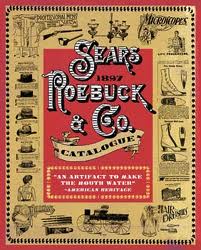 The
Sears & Roebuck catalog started with few pages, but grew
to over 500 pages as his sales grew. Some catalogs
contained 1000-1500 pages. Richard W. Sears was a true
leader in the selling business. Accomplishments include
mail order marketing, reaching rural families, his use
of the railroad system, and the catalog. Richard
guided the Sears, Roebuck & Company business operations
until his death in 1914, buried in the Lakewood Cemetery
in Minneapolis which he considered his home. Later his
body was moved to Chicago where his business
headquarters was located. The
Sears & Roebuck catalog started with few pages, but grew
to over 500 pages as his sales grew. Some catalogs
contained 1000-1500 pages. Richard W. Sears was a true
leader in the selling business. Accomplishments include
mail order marketing, reaching rural families, his use
of the railroad system, and the catalog. Richard
guided the Sears, Roebuck & Company business operations
until his death in 1914, buried in the Lakewood Cemetery
in Minneapolis which he considered his home. Later his
body was moved to Chicago where his business
headquarters was located.
Richard Sears could sell
and sell well. He quickly became one of Minnesota’s
youngest and boldest entrepreneurs.
The old Sears Tower still stands in Chicago but is
now called the Willis Tower.
There are Sears Stores located in all US states.
Deb
Chesley
|
|
Razors
History
The earliest method that man used to remove hair
from the face, chin and neck was with a sharp knife.
The evolution of antique razors is: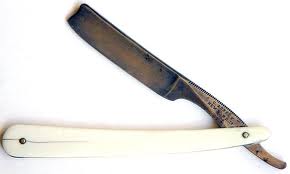
-
Knife
-
Straight Edge Razor
-
Safety Type Razor
After the knife came
the revolutionary metal "straight edge" razor, a blade
made specifically for the purpose of removing facial
hair. The earliest versions were made in England
and shipped to the U.S. and other countries. In
1870 the several U.S. Companies began to machine make
these razors. Plastic and bone handles were
common.
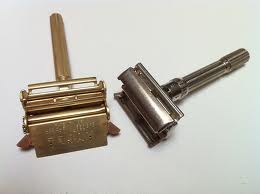 Next
came the "safety razor". In 1880, a U.S. company
named Kampfe Brothers filed the first patent for a
single-edge safety razor, called the Star. With
this patent, razors became less likely to cut the skin -
hence the name of safety razor. The design of the
razor won international awards for design, craftsmanship
and razor replacement. Before this, Kampfe made
metal cutlery at their factory. Next
came the "safety razor". In 1880, a U.S. company
named Kampfe Brothers filed the first patent for a
single-edge safety razor, called the Star. With
this patent, razors became less likely to cut the skin -
hence the name of safety razor. The design of the
razor won international awards for design, craftsmanship
and razor replacement. Before this, Kampfe made
metal cutlery at their factory.
In 1898, an employee
of Kampfe Brothers left the company to open his own
razor company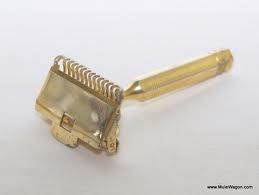 and to compete with Kampfe for U.S. sales. This
company was called The Gem Safety Razor Company. They
manufactured and sold a safety razor and called it The
Gem. The Gem outsold the Star line by Kampfe.
and to compete with Kampfe for U.S. sales. This
company was called The Gem Safety Razor Company. They
manufactured and sold a safety razor and called it The
Gem. The Gem outsold the Star line by Kampfe.
1919, Gem merged with
Kampfe and Ever-Ready to form the American Safety Razor
Corporation - a conglomerate that still makes and sells
razors today.
Value Today
I see 4 factors that determine a razor's collector
value:
-
Brand name and
country made in - German, England, USA
-
Handle material and
logo/carving/artwork. Ivory is the most expensive
material. Celluloid and plastic are more common.
Carvings and artwork can be on either the handle or the
blade itself.
-
Condition - Rust,
nicks...Any damage or is it in perfect shape?
-
You - Do you want it?
Do you need it in your collection? Is the price
affordable? If yes... Go for it!!!
Good luck and happy
hunting for whatever you collect!
Deb
Chesley
|
|
WOOD TEXTILE BOBBINS
ALMOST A TRASHED
COLLECTABLE:
 It
is said that wood textile bobbins are one of the last
true antique items to be saved and collected. Thousands
were trashed throughout the early 1900’s due to the vast
quantity needed in each mill and that they served no
re-purpose in the home. It
is said that wood textile bobbins are one of the last
true antique items to be saved and collected. Thousands
were trashed throughout the early 1900’s due to the vast
quantity needed in each mill and that they served no
re-purpose in the home.
Bobbins came about
during the Industrial Revolution in the textile
industry. Used on machines in textile mills to mass
produce yarns, fabric and thread in the 1800’s through
to about 1940.
Bobbins became of
interest to collectors in about 1965-1970 and are now
collectable and valued for their contribution to our
textile industry.
I am proud to say that I
am an avid bobbin collector. My collection consists of
24 bobbins and growing. Here is what I have learned and
want to share.
WHAT
IS A BOBBIN:
A bobbin revolves on a
spindle to twist thread around and around and around to
keep the thread/yarn tight, neat, untangled and easy to
use. One machine can have 100 plus bobbins in operation
at the same time, with each bobbin either collecting or
releasing thread depending on the process stage.
Bobbins changed the many cotton fibers into one refined
thread/yarn.
These bobbins are not
small – they are made for mass production in a textile
mill/factory. Textile wood bobbins are large because of
their mass use in a factory/mill. Size varies greatly,
but most common are 5” to 10” tall. Diameter might be
2-4” in center and 5-7” on the ends. The draw-box
bobbin is the largest that I know of, maybe 15 inches
tall and 10 inches across the flange (ends).
TODAY'S THREAD BOBBIN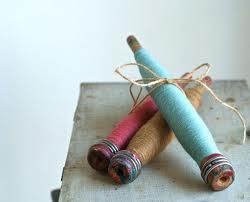 : :
Today, 3 things are
needed to sew on a button: A button, needle and
thread. Under the current day thread is a modern day
bobbin -- a spool that holds the thread. The modern
bobbin is about 2” tall, and typically is made of
Styrofoam cork, cardboard or pressed wood
(economics).
WOODS USED:
The earliest bobbins
were made of birch, alder, Hazelwood, sycamore and
hickory. Later woods included rock maple, birch
dogwood, apple, and boxwood.
Each wood glows with a
different patina after years of use. Patina is the
natural color of the wood.
DIFFERENT TYPES:
Raw cotton goes through
several stages at the textile mill as it is processed
from cotton into thread. Each stage uses a different
style of bobbin. The bobbins we collect today are named
after the cotton to thread process stage.
Here are some types of
bobbins including cotton and wool stages: Spinning
bobbins, twisting, drawing, warping, draw-box, braider,
shuttle, cones, steamer, roving/reducing, finishing, and
frame. Again, all are types of bobbins.
PAINTED ENDS (FLANGES):
Many mills color coded
the bobbins to match the 100 plus bobbins to the same
color coded machine. The reason is two fold: the high
rate of illiteracy and the different languages by
immigrants.
Some mills color coded
the bobbins to designate the quality of the yarn/thread.
However, the painted
ends were never used to indicate color of yarn/thread.
METAL
SHIELDS ON ENDS:
Many wood bobbins have a
metal band or plate on one or both ends to protect the
ends during the high speed machine process. Tin was the
first metal used, but it discolored the yarn. Copper
and brass were used next. Zinc plated steel and steel
alloys came about next and were less expensive.
TIP FOR COLLECTORS:
When one material is replaced by another, the old
version becomes more valuable. With bobbins, the
copper/brass ends are more valued.
COLLECT AND
ENJOY!
Deb Chesley
Antique Dealer/Collector
|
DEPRESSION-ERA GLASS --
WHAT IS IT? WHAT IS THE HISTORY BEHIND THIS HIGHLY
COLLECTIBLE ITEM
Table
settings in the 1920's & 1930's mostly consisted of
mass produced depression glass. The name comes from the
fact that it was made during the "depression-era".
Colors include pink, yellow, crystal, delphite,
ultramarine, white, green, and more. Product varies
from candlesticks, pitchers, butter dishes,
plates, cup/saucers, drinking glasses/tumblers,
creamer/sugar, candy dishes and more. This glass was
affordable to many because of how it was made when times
were tough.
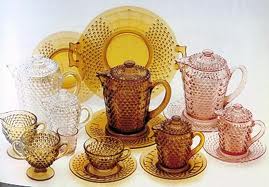
Technical
info: Depression glass was made by a mold (also called
a tank mold). Silica sand, soda ash and limestone were
melted in a ceramic tank. Once liquid it was piped into
a pressing mold. When it cools and came out of the
mold.... you had depression glass in a solid and useable
form.
The early
major manufacturers who were instrumental in making this
product are Federal, Hazel, Atlas, and US Glass. Women
of the 1920s to 1930s often received a piece of
depression glass inside boxes of soap.... or even at a
local movie theater to entice them to buy a movie
ticket.
This
inexpensive glass item helped many households get
through hard times by buying affordable kitchen items.
And, it also helped the glass companies survive the
depression and hard times.
|
|
Want Fries With
That Toy?
Fast Food Collectibles
Fast food toys became
popular in the 1980's. McDonalds started the trend
with a toy in the Happy Meal. Buy a meal and get a
free toy - very enticing to kids. The toys are
inexpensive and fun! It's a low cost lure to buy
the food item.
Fast food toys are
now considered "pop culture" artifacts. These free
toys are highly collectable. McDonalds is the
first restaurant to come to mind, but there are others:
Arby's, Burger King, Kentucky Fried Chicken, Wendy's and
more.
Fast Food Toys Are
Highly Collectible - Here are a few price examples:
-
McDonalds - 1986
Muppet Babies - $50
-
McDonalds - 1991
Mighty Mini 4x4 - $2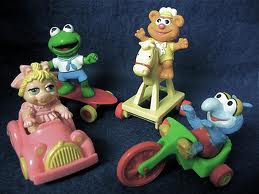
-
McDonalds - 1984 MN
Twins Glove - $75
-
McDonalds - 1989
McNugget Buddies - $2
-
Subway - 1999 The
King and I - $2
-
Wendy's - 1994 3-D
Classic Comics - $3
-
Dairy Queen - 1994
Circus Train - $5
-
Burger King - 1995
Gargoyles - $2
-
Burger King - 1992 Go
Go Gadget Gizmos - $6
-
Burger King - 1972
Cartoon King Doll - $30
These toys give kids
fun. Now, adults are searching for them to
collect!
Deb Chesley
Antique Dealer/Collector
|
|
Cast Iron Skillets -- new or old
-- You can cook with them TODAY
History:
Cast iron pans became popular during the last half of
the 1850's, and patented as early at 1864.
Manufacturers mass produced pots using a mold that could
be used over and again at a minimal cost. Cast iron was
melted in a blast furnace. In this molten stage, it was
poured into a mold. One type of the oldest cast iron
pots were called the "pivoting crane" as the pot swung
over an open fire to cook, then could be swung off the
fire to dish out. I see these often in movies. The
"pivoting crane" was commonly used in a settler's home
and on the open range (sleeping under the stars).
For me, just saying "cast iron pan" with "cooking" makes
my mouth water. These pans still cook a great meal
- all in that fabulous cast iron skillet or pot. With
some TLC these pots will last a lifetime.
Current prices on old pieces are based on rarity, size
and manufacturer.
Griswold and Wagner are two common brand names.
Griswold is the more expensive line.
Cooking with old or new cast iron
and how to prepare the pan, pot or skillet.
I use cast iron pots and pans often in my kitchen. Here
is some information to help you start using cast iron
pans.
You need to "SEASON" the pan
one time to make it a nonstick surface. Coat the pan
inside bottom and sides with cooking oil. Bake at 350
degrees for one hour (alone in the oven, empty of food).
Dry with paper towels and the pan is now ready to use.
After a few uses with food, the "seasoning" process
will continue and you will have a great pot or skillet.
HOW TO CLEAN:
Do not wash in the sink with soap. DO NOT.
The best way to clean a cast iron pot or skillet is to
rinse with hot water right after use, wipe dry and
store. For burned on food, scrub with coarse salt and a
non-metal brush. If that does not work, you can use a
few drops of dishwashing soap.
If the pan gets a sticky coating, then scrub with steel
wool and soap. Next, re-season in the oven with oil.
I hope you enjoy your old cast iron pots, pans and
skillets. I sure do !!
Deb Chesley |
|
Missing Pieces
Are you missing one piece of china, or one crystal glass, or 2 forks from your set?
I hear these requests most often in the antique shops:
1. "I broke one cup from my 1940s china set - help!"
2. "My mother gave me her silverware, but it's missing three butter knives."
3. "I bought my dishes 5 years ago but now I want to get the large serving pieces."
4. "I want to buy the matching gravy boat and larger platters/serving bowls that I could not
afford before."
Where do you begin
to look for replacement pieces of these older patterns?
You can try hunting from one antique store to another. That may be fun for a while, but it is very difficult or near impossible to find one specific piece of one specific pattern in your specific color. This hunting game at antique stores soon becomes very time consuming and frustrating.
A much easier solution is a company called Replacements LTD. This company sells both old and new china by the piece. Plus, everything from dinnerware, stoneware, crystal glasses/stems, silver/stainless flatware, to collectibles-- again, in both old and
new patterns! They have a large stock that changes daily, plus a knowledgeable customer service staff to assist you. Replacements LTD can help you complete your set much quicker than you can going from antique store to antique store. I have used this service myself with much success. They also BUY product by the
piece or set. Personally, I haven't done this because I am also a reseller.
To see examples of older patterns that you can obtain
through Replacements LTD:
Click Here.
You can contact Replacements LTD by either going online:
www.replacements.com or by giving them a call: 1-800-737-5223.
Good luck hunting for your treasures! Remember, each and every antique has its own attitude!
Deb Chesley
Antique Dealer/Collector
|
How To Sell Your Items:
There are several methods of selling old items, antiques, and
collectibles. Each method requires additional information and precautions that are not all included below, plus each has its pros, cons, and possible fees/risks that you should evaluate for
yourself. This article is by no means all inclusive of information and risks. This is my personal opinion and is meant to be a starting point of information to assist you. Good luck! You can sell your items successfully!
Methods To Sell:
1. Sell to an antique dealer.
2. Sell items yourself at an
online auction such as eBay.
3. Hire a service to sell your
items at an online auction.
4. Have a garage sale.
5. Have an estate sale yourself -- or hire an estate sale company.
6. Donate items for a tax
write-off.
Let's look at option one in more detail -- Sell to an antique dealer.
First you should find a dealer you can trust and feel comfortable with. A dealer who will offer a fair price for items and/or information. I have 5 to 10 customers who sell items to me on a regular basis. We've built a buy/sell relationship where we can each profit. I trust them and they trust me. Seek to build this
type of ongoing relationship.
When talking to an antique dealer, you
should not just ask, "What is this worth?" That is too general of a question. Narrow down what you want to know. Be specific -- what type of price do you want to seek? A reputable dealer should also want to pre-clarify this point. If the dealer doesn't first ask YOU specifically what you seek, then walk away.
There are many types of prices a dealer can provide. You should pre-clarify what type of price you seek and what the information will cost, if anything. Let's take a look at the types of prices below:
Types of Prices:
1. The price the dealer will pay now to buy straight from you.
2. The estimated price you can sell it yourself at a garage sale.
3. The estimated price the item will retail for at an antique show.
4. For a fee, a dealer can research and evaluate your items and provide written
documentation if requested.
5. For a fee, some dealers can provide a written insurance appraisal value.
Where can you find an antique dealer? You can begin by asking questions at antique stores that you respect and like to shop. Ask for a dealer who has knowledge about your items. Once you find a dealer, ask him/her questions. Be specific with exactly what information you want, what the charge will be for the dealer's service (if any,) and in what format you want the information (writing, verbal, now, researched.)
Each dealer's knowledge and experience varies, as with any other service industry. When speaking with a dealer, ask yourself this: Does this dealer seem to be straightforward and open with answers to your questions? Does he/she seem a little hesitant or "shifty"?
Is he/she seeming to guess, or perhaps lie to obtain a service fee, or even worse, to obtain your valuables for next to nothing?
Example #1: You have an antique Tonka brand toy truck to sell -- it might be worth $25 to $150 to $600 retail in an antique shop -- you need to speak with an experienced and reputable dealer who specializes in toys. Visit antique shops or shows and ask who specializes in toys. The person behind the counter at the average antique shop may say he/she wants to help you but they might also just want your treasure. That's why you want to talk to a dealer who specializes in toys. Be specific when talking to the people behind the counter. Trust your instincts, if it doesn't feel right
to you, simply walk away. You can also call antique shops and inquire about dealers who specialize in your item.
Always speak with a dealer who specializes in your type
of item!
Example #2: Let's say you have a rifle or military item that is 100 years old -- you need to speak with a dealer who specializes in antique guns and military items. I am a dealer, but I don't know anything about guns, and I would tell you that flat out! I don't
joke around to try to buy your treasure at a low price. I could not tell
you if it was worth $50 or $5000. My advice would be to seek a gun/military specialist and if I knew someone, I would refer you to them. A good dealer always knows another good dealer!
Example #3: If you have valuable vintage jewelry, you should seek a dealer who specializes in vintage jewelry. I wouldn't be able to
tell you if it was 18K or 24K or if the red stone was a ruby or garnet. You need to find a person who can. I do deal with some jewelry, but my knowledge is still limited. I will not buy a piece of jewelry
worth over $1000 from a stranger unless he has a written appraisal from a local jewelry store that I know and trust. This customer can then come back to me with his/her vintage gems and a written appraisal. Then, and only then, will I offer a price. This protects you and it protects me. Most antique dealers behind the counter often cannot provide information on expensive vintage jewelry. I can't emphasize this enough:
Not all dealers can help you in all areas!
If you have coins, seek out a coin
dealer -- either through an antique shop or a coin shop. Remember, don't trust everyone!
Your best defense is to ask questions before agreeing on a selling price!
Selling your items can be complex. You don't want to be
conned into selling a treasure for just a dollar. You need to protect
yourself by doing some research and asking a lot of questions.
Many dealers give free advice for simple/quick requests. For example, a customer may bring in 2 boxes of items and wants to know if he should garage sale it or sell to an antique store. I will give the customer 10 to 15 minutes of my time for free. He has to bring the items in clean, sorted, and organized. I can then do a quick scan, and say "this is worth $5," "this is worth $1," "this is worth researching," "this could be valuable," or "I want to buy this." This is a fun scan of your items
that dealers should enjoy offering for free.
For a pre-set fee, a dealer can drive to your home and provide a quick overview of your items. You both should first agree on the specific information requested, type of price, fee, and specific block of time beforehand. The dealer can then spend the allotted time evaluating your items, giving you verbal "off the top of my head" prices that you can either record on tape or write down. This information can also be written by the dealer but this usually costs more because it's more time consuming for the dealer. The bottom line is you as the customer want to know if the items are valuable or not, what they are worth, and if you should sell it at a garage sale.
If you want specific research done on items for sentimental reasons, insurance, or monetary value for determination of future inheritance, etc., you need to know that this is more time consuming and requires extra time for proper research, whether it would be by computer, reference books, or other sources. You need to work out the details and price with the dealer.
In closing, I would like to recommend a book for further reading that's brand new on the bookshelf titled "Buy, Keep or Sell? - The Insider's Guide to Identifying Trash, Treasure, or Tomorrow's Antiques" by Judith Miller, who is an authority on collectibles and price guides.
Coming soon: How To Research An Item Yourself
Happy hunting and selling! Remember, even a Red Wing bowl has its own attitude!
Deb Chesley
Antique Dealer/Collector
|
How To
Research An Item Yourself
There are several different ways to
research an item by yourself. All methods,
however, take time and effort on your part, but can be done if
you are diligent. Here are 4 basic methods:
1. Shop Antique Stores
2. eBay or other online auction sites
3. Google search
4. Reference Books
Method 1 -- Shop Antique Stores
Visit a local antique store with the single purpose of
looking for a similar item -- you are NOT shopping for yourself, but rather you are searching
for similar items. Take a note pad, pencil, and tape measure. Sorry, no cameras are
allowed in any antique store. Jot down specific notes on items found that are similar,
identical, or to compare. Include color, condition, size, draw a sketch, if needed. Also
include information on the sales tag: the price, any key words such as who
made the item, years made, etc.
Example: You own a pottery vase, but don't know how
old it is, the value, or even the pottery company that made it. What to do: Shop
several antique stores, looking for all pottery vases. Search every shelf and every locked
case. Read the price tag or label to see if a pottery company (manufacturer) is listed.
Bring a tape measure to measure the height of similar vases.
Method 2 -- eBay or other online auction sites
Log into eBay and browse items for sale. You
can also do an "advanced search" on recently closed auctions back to 15 days. Search by
different key words. The key words you enter to search are important as they draw in
what items you will see. Look at the pictures of items that are similar to yours.
Read descriptions looking for words that will help you identify and value your own item.
(If you want to sell your item, you can list it.)
A second website you can use is
Artfact.com.
Craigslist.org is a
third website that can be used to compare items.
SAFETY WARNING: When using websites for
searches, selling, or communicating with others, PLEASE BE CAREFUL about how much personal
information you offer! Scammers hide on the internet.
Method 3 -- Google Search
Use Google or another search engine. Try typing in
various key words to what assistance you can find.
Example: Google search "price of a red wing vase".
Several sites about Red Wing Pottery will appear for you to check out. Related
reference books for sale will appear. Of course, you could also see Red Wing shoes, Red Wing
city information including hotels in town, etc. Sort through your search results
to get the information you need.
Method 4 -- Reference Books
As an antique dealer, I have learned to heavily
rely on and use reference books. I probably own 200 such books, plus all antique shops
keep reference books for dealers and customers to use while in the store.
There are a few different types of reference books:
1. Price Guides -- Offer dollar value information
2. Information Only -- No pricing, just the history.
3. Combination of both.
There are books that only cover one item specifically,
such as JUST Red Wing Pottery. There are "general" books that cover all types of one
area such as "all kitchen items", "all types of depression glass patterns", "all toys",
or "all pottery makers."
Lastly, there are general reference guides that cover
every type of antique from Apple Peeler to Zaneville Pottery, in alphabetical order.
Kovell's of Schroeder's are the most common of this type.
You can view reference books at an antique store, local
county library, buying from a book store, or you can even buy reference books online.
When using a reference book, the first thing I do is
identify what year the book was published so I know how old the pricing information
is. For example: I am pricing a depression glass plate. If the reference book was
published in 2000, that is important for me to know that the prices in the book are 7 years
old. I would then look for a reference book published closer to the current year.
Reference books are a wonderful resource for not only
pricing data but also for detailed information about when your items were made and by
whom.
As you can see, researching an item yourself will take
some time, patience, and a little work on your part. But it can be done!
Remember, every antique has its own attitude!
Deb Chesley
Antique Dealer/Collector
|
Experience
Late 1800s Farming and See Antiques in Action!
There are several farms in the Twin Cities area
that offer a hands-on tour and learning experience of farming from over 100 to 150 years ago. They basically tell
the story of agriculture in Minnesota. These are working farms that show what farm
life was really like in the past. Plus you get to see numerous antiques in their natural
setting and actually working!
Here are four such farms:
1) The Oliver H. Kelley Farm in Elk River on the
Mississippi River: This is an 1800s tranquil living-history farm. It is a museum,
owned and operated by the Minnesota Historical Society. Dressed in period clothing,
staff members perform daily farm activities of rural life between 1850 and 1876.
Visit their website for hours and admission prices, or more information:
Oliver H. Kelley Farm
or call 763-441-6896.
TRIVIA QUESTION: When did Minnesota achieve
Statehood? The answer is at the end of this article.
2) The Eidem Farm in Brooklyn Park: This is a restored
1894 Homestead with a Norwegian heritage. Visitors
can ride the hay wagon, drink fresh cider, collect hen eggs, tour the old kitchen, and roast
marshmallows at the bonfire. Volunteers in period dress work the farm, the kitchen, and
answer all your questions. The farm is open through mid-December. Visit their website
for hours, admission cost, or more information:
Eidem Farm
or
call 763-493-8367.
3) Murphy's Landing in Shakopee: This is a museum and
living history village set in the 1850s to 1890s with an emphasis on the settlement
period and Civil War era. See a blacksmith, print shop, millinery, and more...all
operating as they would in the mid to late 1800s. Visit their website for more info:
Murphy's Landing
or call 763-694-7784.
4) The Gibbs Museum of Pioneer and Dakotah Life, also
known as The Heman Gibbs Farmstead in Falcon Heights: This is a museum
that educates visitors on the lives of 1800s Minnesota pioneers and the Dakotah people (also
called Dakota) who lived in southern Minnesota. This is a living museum with
a farm house, barn, school house, sod house, bark lodge and tipi -- all from about
the 1850s. There is also a Dakotah medicine teaching garden and Dakotah vegetable
garden. Visit their website for more information:
Gibbs Museum of Pioneer and
Dakotah Life or call 651-646-8629 and/or 651-222-0701.
TRIVIA ANSWER: In 1858, Minnesota achieved Statehood.
These farms are like traveling back in time. There are
antiques everywhere! Plus you get to see many of the antiques actually being used. I encourage you and
your family to visit an 1800s era working farm. Ahh...you can FEEL, SMELL, and TASTE our
past!
Remember, even a wooden spoon can have attitude!
Deb Chesley
Antique Dealer/Collector
|
Sell Your Gold For Cash
This is a trend seen all over the internet and on
TV commercials. The companies ask that you send them your unwanted, broken, or mismatched
gold, silver, and jewelry. Does it work? Can you make money? The answer is YES, you can receive
cash for your unwanted gold items. Gold, silver, platinum - any amount - any color
- any karat weight. Even dental gold, charms, coins, and silverware.
The company asks you to drive to their store location,
to call their 1-800 phone number, or log onto their website to order a free packet that they mail out to
you. You then place your old gold into the free mail packet and send it back to them. The
company then sorts through the items. They conduct normal testing and an assaying
process. The term "karat" indicates the purity of the gold, such as
10 Kt or 14 Kt. They then weigh your items and mail you a check.
Some websites offer you a grid of the price per ounce
offered and update that price daily based on market value. Some companies suggest you hold a party at
your house and party guests brings their old jewelry. A rep is sent to your home to
analyze the items guests bring. Checks are given that day to your party guests.
If you prefer selling your gold in person, there are
local places that you can drive to such as pawn shops or jewelers who may buy your old items. Below are just a
few of the many places you can contact to sell your gold.
NOTE: I do not recommend or endorse any of these
companies. I have not personally used any of them. I have talked to people who have sold their gold (both
in person and through the mail) and they were very pleased with the cash received.
Places to mail your gold to:
1. Cash4Gold.com - Phone: 1-877-GOLD-590 (Mail only,
located in Florida)
2. USGoldBuyers.com - Phone: 1-877-977-GOLD (Mail
only, located in New York)
3. EmpireGoldBuyers.com - Phone: 1-888-949-3674 (Mail
only, located in New York)
4. TopDollarGold.com - Phone: 1-877-GOLD-097 (Mail or
FedEx, located in Colorado)
Places you sell your gold in person:
1. 952-GOLD-GUYS: Bring your items to their store
at the Mall of America. They also offer a "gold selling party" right in your home.
They send the rep to you. (Contact them for more information.)
2. HotelGoldBuyers.com - Phone: 1-877-721-8033. They
buy gold at certain hotels every weekend in Eden Prairie, Maple Grove,
Bloomington, and Edina. They also offer the in-home gold selling party.
3. Pawn America Stores, call 952-646-1760 to get the
location closest to you.
4. Wedding Day Diamonds, 5 store locations. Call
952-513-0030.
Here is an example of what you can expect based on the
weight. If you have $20 worth in WEIGHT of GOLD, they will offer you between $4 - $7, not the full $20.
As with any business dealing, please do your own research on any company you do
business with.
Remember, even a wooden spoon can have attitude!
Deb Chesley
Antique Dealer/Collector
|
Christmas Gift Ideas For An
Antique Lover
Your spouse, friend, mother, or boss collects
antiques. What should you give them for a gift? Below are a few points to consider:
a.) Gift Certificate from an antique store.
b.) A shopping spree/day with you.
c.) Buy the item they collect -- pros and cons to this
option.
d.) A reference book
e.) Start a child/teen collecting
Gift Certificate From An Antique Store
Most antique shops offer gift certificates for sale in
common dollar amounts such as: $25, $50, $100. Just ask a sales clerk. Of course, the gift certificate is
good at this one location only. This makes a wonderful gift!
A Shopping Spree/Day With You
I like this idea: Give a gift of a day or an
afternoon of antique shopping with you. You don't need to buy them everything they like or want, just set some limits
and what you want to pay for.
I give this gift often -- something like:
Example 1: My gift to you is A DAY OF
ANTIQUE SHOPPING: I will drive, we leave at 9:00am, hit the stores in Stillwater. Lunch is on me,
and you have all my attention all day as we browse from store to store. I
won't complain that you are looking at fishing lures too long. I promise,
no complaints from me. That is my gift to you. I will buy you one item of
your choice up to $40 dollars. So let's go antiquing together!
Example 2: My gift to you: Let's go
antiquing! I will buy you one Red Wing Crock of
your choice. Put on your walking shoes and let's hit
the antique stores!
Trust me, this is a wonderful gift for a person who
like antiques, collectibles, or just browsing for them at the shops!
Buy The Item They Collect -- Pros And Cons
Unless you are knowledgeable about the item or the
category of item that the other person collects, I would probably not buy it for someone else for a
gift. Why? The policy at nearly all antique stores is "no returns and no exchanges -- no exceptions."
Example 1: Your husband collects antique fishing
lures. You know nothing about them,
then visit the closest antique store and buy 2 lures for
him. When he opens
the gift, he tells you that he already has one of them
and the second one is a reproduction and worth a fraction of what you paid. The
receipt is stamped: No returns.
Example 2: Your mother collects Hall Pottery.
You buy a vase at the local antique shop
thinking it's Hall Pottery. Your mother opens the gift
and immediately knows it's not made by Hall Pottery, but rather by Hull
Pottery. The receipt is stamped: No returns/No exchanges.
Therefore, I warn against giving a specific antique
item as a gift unless you have some knowledge about the item they collect. If you've shopped with this person
for years and know the ins and outs of the item, then by all means, shop for and buy the
item with confidence that it's just what they do collect and it's
the item they need for that collection.
A Reference Book
A reference guide OR price book makes a wonderful
gift! You can buy them at some antique stores, at all book stores, and online...or give a gift card from
a local book store.
Remember, every antique has its own attitude!
Deb Chesley
Antique Dealer/Collector
Start A
Child/Teen/Adult Collecting
A hobby, a collection, an early passion. You can start
a child, teen, or adult onto a lifelong path of
collecting. Start by sharing your knowledge and
enthusiasm at home. Share and show what you collect and
have a passion about.
Then:
a.) Take the child/teen/adult shopping at an
antique store
b.) Buy a reference book
c.) Buy an item to start their collection
As the new collector's knowledge in the area grows, so
will their passion for finding and learning more about
that item.
I am always pleased to see a new and blossoming
collector develop. Many new collectors enjoy collecting
items such as coins, foreign bills, comic books, paper
dolls, cameo jewelry, stamps, collector Barbie dolls,
Tonka brand trucks, Hot Wheels cars, board games,
fishing lures, wood golf clubs, sewing bobbins, hankies,
aprons, military helmets, and so much more.
Another common type of collection is to collect anything
related to one topic:
1.) Example: collect anything related to John Deere
tractors -- a framed picture of a tractor, a mug
picturing a John Deere store, a t-shirt with a John
Deere tractor/logo.
2.) Example: collect anything related to strawberries
-- a collector plate picturing a porcelain strawberry, a
strawberry cookie cutter, a Strawberry Shortcake doll.
3.) If your child is interested in hair design or
fashion, start her collecting anything related to a
salon shop or hair dressing, such as antique scissors or
hair clippers, old hair clips, men's shavers, shaving
cream brushes, books or magazines about fashion or hair
styles, an old barber shop sign.
4.) If your child likes firefighters, start him
collecting anything related to that, such as an old
copper fire extinguisher, an old "rule book on
firefighting," fireman's helmet, photographs of a fire
truck, toy fire trucks, a novel with a picture of a
firefighter on the cover.
Searching for items and learning about them is quite an
experience! Once a new collector catches the
"collector's bug" and begins to feel the passion for an
item, their fun will begin. Good luck and enjoy shopping
those antique stores!
Remember, every antique has its own attitude!
Deb Chesley
Antique Dealer/Collector |
Tips For A
Successful Garage Sale - Part 1
I love garage sales!! I love having one! I love to
shop them! Garage sales are a great way to get rid of
your items and make a few dollars. Since spring is
literally around the corner, many of you are shifting
gears for spring cleaning and garage sale season. All
month long I will feature ideas that you can implement
to help you put on a successful garage sale. Some
things you may already know, while others you may have
never thought of or never tried before.
Keep this point in mind during your preparation: The
purpose of your sale is to make money and get rid of
stuff -- a plain and simple goal.
WARNING: It takes work and time to hold a garage sale,
there is no way around that. You need to commit your
time, but I can make some suggestions that will make it
more fun!
Keep it fun and short: Approaching a
garage sale can seem like a lot of work, and it is. Keep
the process: 1.) Fun & simple and, 2.) short.
1.) FUN & SIMPLE: I think about my sale as a fast and
fun project. Get it done this week - 7 days total
time. Make it a family affair -- involve others. Ask
your neighbor, kids, or grandkids to help in both the
set up and during the sale. A reward for them is that
they can bring items from their own home to sell at your
sale, plus they can have first look at your items
for sale. The first buyers get the best stuff.
2.) SHORT: Set up your entire sale in 7 days. Keep the
time frame short for preparation. You can get a lot of
work done in 2 hours a day for 5 - 7 days. That's your
preparation time. Do not take 3 weeks to set up -- that
would disrupt your life and your garage. Remember your
goal: sell your stuff and make some money.
Antiques With Attitude,
Deb Chesley
Antique Dealer/Collector
|
Tips For A
Successful Garage Sale - Part 2
Next, it's time to determine what days to hold your
sale. The most popular days are Thursday through
Saturday. That's what I would suggest as well.
You can expect that the first few shoppers who arrive at
your sale may seem to walk in and then leave without
buying anything. Why? Thursday mornings from 8:00 to
10:00 are times that collectors and professional dealers
go out and buy. These shoppers are often looking for
one very specific item. They walk in your garage
do a fast scan and then leave. Don't be discouraged.
Your sales should begin to pick up at 10:00 am or noon
when the average garage sale shoppers wake up and start
to drive.
The average shoppers start to arrive at 10:00 am, but I
always open at 8:00 am for those people driving to work
who might see the signs and decide to stop for a couple
of minutes.
Another thing you can do to boost your sales is to
invite your neighbors and friends to your garage the
night before your sale opens...even if you are still
pricing and working in your garage. Just tell them to
come on over and shop!
Now that you determined the days of your sale, the next
thing is advertising your sale.
I am probably unique in this suggestion, but it works
for me. I have never once placed an ad. I use
signs...a lot of very well placed and daily monitored
signs. If you don't have the luxury of living on a main
thoroughfare, you begin by placing signs directing them
off the main thoroughfare to your sale. Your signs
don't have to be elaborate. Just a simple "Garage Sale"
with an arrow pointing them the way. Keep your signs
the same color...if you start with a yellow sign, keep
using yellow signs throughout the route to your sale.
In contrast, most people tend to place an ad in the
local newspaper. Use your local shopper. It's
delivered to every household in the area every week. I
happen to live in Anoka, so my local shopper is the
Anoka County Shopper.
These are the two most popular advertising options for
garage sales. You can use one, the other, or a
combination of the two. There is no right or wrong
option, simply go with the option that you feel most
comfortable with.
Antiques With Attitude,
Deb Chesley
Antique Dealer/Collector |
Tips For A
Successful Garage Sale - Part 3
A difficult
question is how do you price your items?
This can be difficult to advise on. The general
rule is to think of the retail price at a department
store and mark it at 1/4 of that. Of course, another
factor to consider is the condition of the item. An
item in good to excellent condition can be marked at
this rate or slightly higher, but if it's in fair to
poor condition, it would have to be marked at a lesser
price or free.
Example: You
bought a set of 6 drinking glasses for $20 at Target. I
would sell them at my garage sale for about $4 or $5.
However, the same set with only 5 glasses would be
priced at about $2.
When pricing, think about what people want and are
willing to pay at a garage sale. If you
are a novice at garage sales, spend a few hours shopping
at other garage sales to see the pricing
structure.
Another price example: You bought a set of 6
crystal/fancy cocktail glasses at Macy's for $60. They
are in perfect condition and still in the original box.
I would price them at $10 to $18. Sorry, but that is
how the pricing game goes. You can't get more at a
garage sale.
Overpricing is definitely not suggested. You will be
wasting your time. Customers will know INSTANTLY if you
are overpricing and will walk away to go to the next
garage sale. PRICE LOW...YOU WANT TO SELL!
Sale Preparation
Ok, your sale starts tomorrow. Your items are all
priced. Now you need to prepare the supplies that
you'll need during the sale.
Below is a quick checklist:
** Bags to put
sold items in
** A card table and chair for you to sit at and keep
your supplies and money handy
** Newspaper to wrap fragile items you've sold
** Money to make change (I suggest starting with either
$70 or $100 in coin and bills)
** Items for your comfort: A radio, TV, fan, etc.
** A calculator
** Scratch paper and pen
** Phone! This is important! To answer your incoming
calls and for your personal security
Which brings up a good point. Personal safety is very
important to consider. After all, you are opening up a
part of your space to complete strangers.
Keep your money secure at all times, all day long. If
you go into the house for a cup of coffee, take your
money with you. Move large bills ($20s and higher) into
the house. Some people like to have a money box or money
drawer that keeps all the denominations of coin and
bills separate. Not me! I prefer to WEAR my money.
That way it stays with me always. I use a carpenter's
apron with slots (off white in color, very common) or I
wear a fanny pack around my waist, or even a small purse
(wallet size with a long strap) over my shoulder. I wear
my money so it goes where I go as I walk around the
garage.
Do not let customers into the house to use your bathroom
or try on clothing. This would be an open invitation
for things to "grow legs" and disappear.
Keep your cordless phone or cell phone at your
fingertips at all times, just in case. If you begin to
feel scared or feel uncertain by customers walking into
your garage, either walk into your house and lock the
doors, or walk out of the garage and into the middle of
the street with your phone in hand. You can still see
the garage and monitor the customers. Keep your
personal safety in mind. Keep alert.
After your sale:
My advice again is to keep the time frame short.
Immediately after the sale ends, pack up all your unsold
items into boxes and bags for donation. Do it fast and
do it now! Clean your garage out, so your vehicles can
come back in.
Items that are donated can be a tax write-off if you
take the time to log each item. As you place them into
a box, write it down on a pad of paper. Use "tick"
marks for common items. You need a receipt from the
company you donate to such as Goodwill.
Example: T-shirts: III means 3 t-shirts
Ladies jeans: IIII means 4 pairs of
jeans
To determine your tax write off value, please refer to
instructions on the State forms and instruction book.
The write off value is low, but they add up. For
example, 3 t-shirts valued at 20 cents each is realistic
and 4 ladies jeans at $1 each is also realistic in my
opinion.
Antiques With Attitude,
Deb Chesley
Antique Dealer/Collector
|
We receive many
emails from our readers but I would like to share this
particular email with you all.
Memories of
childhood toys that are now "Hot Collectibles".
Enjoy her memories of a Christmas Past:
Hi
Deb,
I love antiques, but I noticed your hot and not hot list
and thought I would share a story with you. I am
50 yrs old, so you may remember those toy sewing
machines (on your hot list!). Only my dad worked
and didn't have a high paying job, we didn't get much
for Christmas, but one year I was in the first grade and
I got a pink sewing machine that really sews and a real
Barbie, not a plastic knock off. Oh joy...no paper
and coloring crayons this year.
Off to school I went after Christmas vacation and on the
first day home back from school, my pink sewing machine
was broken and my Barbie doll leg was broken from my
younger brother and sister. Being I was outraged,
I tried to shorten their life spans like my toys (but we
are all very close now...). Well, the Barbie
eventually got replaced but the sewing machine didn't.
For years I would talk about the cute pink sewing
machine that got broken after one week. My sister
finally said, "we'll buy you a new one if you shut up".
That was 35 years after the fact.
Well being she offered (but probably didn't mean it),
the subject was no longer important. But now I see
the HOT kids sewing machine and memories come flooding
back!! I can hardly wait to tell my sister!!! (who
fessed up breaking it by sewing my broken Barbie doll
leg on it that my brother broke).
Thanks for the memories, and yes, I do shop in Elk River
Antiques.
|
RED WING STONEWARE
-- BRIEF HISTORY
We, here in Minnesota, are very fortunate to be near
this popular pottery company founded in Red Wing, MN.
Red Wing Pottery is one of the most famous makers
of crocks, dinnerware and unique pottery in the entire
US. I am a collector and boast many butter churns, salt
crocks, serving platters and jugs. Other items offered
are cookie jars, dinnerware including plates, pitchers,
vases, flowerpots and more.
Red Wing Stoneware is still producing
pottery products today. A nice day trip would be to
visit the town of Red Wing. There are numerous antique
stores to visit, plus the Red Wing Stoneware
factory/showroom where you can view crocks and pottery
being made by hand. You can also purchase new pottery
there. The antique shops will sell the older pieces.
Here is a brief history of this
famous company:
The Red Wing Stoneware Company was
formed in 1877 starting with kilns fired by wood and
coal. Power came from horse-powered steam engines. The
company quickly became known for making “useful” pieces
that each home needed.
Several different sub-divisions of
the company emerged, but all were under the Red Wing
Stoneware Company. All companies united in 1906 to form
one pottery company. They prospered selling crocks and
other pottery that every family used daily in the
kitchen. In 1936 the name changed to Red Wing
Potteries.
The name of this wonderful company
has changed often, but the products remained the same:
Basic pottery items used daily made from clay and sand.
Enjoy Red Wing Pottery… I sure do!
Deb Chesley
|